Aide-De-Camp (ADC) – Complete Guide for Defence Aspirants
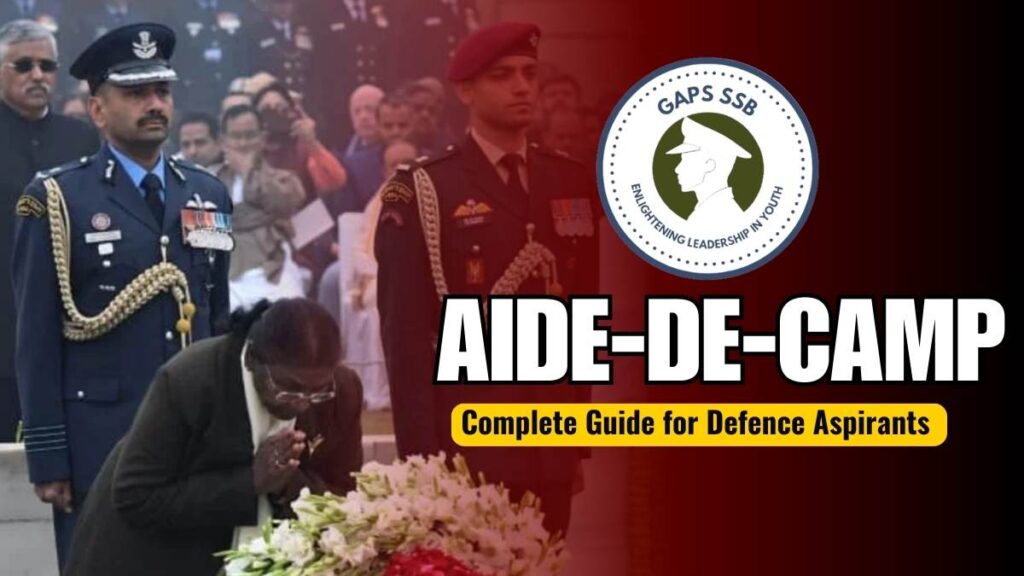
In the journey of preparing for defence services, aspirants often come across unique military terms that are important for interviews and personality assessments. One such important term is Aide-De-Camp (ADC). Many candidates appearing for SSB interviews, especially at GAPS SSB, are asked questions like “What is an Aide-De-Camp?” or “What are the duties of an ADC?” In this SEO-friendly guide, we will cover everything you need to know about Aide-De-Camp, including its meaning, selection process, duties, and importance in the Indian Armed Forces. What is Aide-De-Camp (ADC)? An Aide-De-Camp (ADC) is an officer in the Indian Armed Forces who is appointed as a personal assistant and protocol officer to senior military or constitutional authorities. The term ADC stands for Aide-De-Camp, and it is considered a prestigious and honorary appointment. An ADC can belong to any of the three services: They are attached to high-ranking officials such as: This role requires discipline, professionalism, and excellent organizational skills. Role of ADC in Armed Forces The role of an Aide-De-Camp is not limited to basic assistance. An ADC acts as a bridge between senior officers and administrative systems. They are often described as a “multi-skilled officer” because they handle operational coordination, protocol duties, and administrative responsibilities. For defence aspirants preparing for interviews like GAPS SSB, understanding this role reflects awareness of military hierarchy and functioning. Eligibility and Selection of ADC Becoming an Aide-De-Camp is not an entry-level opportunity. It is a position earned through merit and service. Basic Eligibility: Selection Process: Usually, officers holding ranks like Captain or Major (or equivalent in Navy and Air Force) are selected. The tenure of an Aide-De-Camp is generally 3 years. How to Identify an ADC? An Aide-De-Camp can be easily identified by distinctive elements on their uniform. Key Identifiers: The aiguillette (decorative cord) is one of the most recognizable features of an ADC. Duties of an Aide-De-Camp The duties of an Aide-De-Camp are diverse and require high levels of responsibility. Key Responsibilities: An ADC plays a crucial role in maintaining smooth functioning at the highest levels of command. ADCs for Senior Authorities Different high-ranking officials are assigned a specific number of ADCs. Example: This shows the importance and trust associated with the role of an Aide-De-Camp. Why ADC Role is Prestigious? The position of Aide-De-Camp is considered highly prestigious because: For many officers, becoming an ADC is a matter of pride and recognition of their service. Importance for GAPS SSB Aspirants For candidates preparing for interviews, especially at GAPS SSB, knowledge about Aide-De-Camp can be very useful. Why it matters: Questions like: are common in SSB interviews. A clear understanding of this topic can give you an advantage. How to Become an ADC? If you aspire to become an Aide-De-Camp, you must first: Consistency and performance are key to achieving this prestigious role. Conclusion The Aide-De-Camp (ADC) is one of the most respected and responsible appointments in the Indian Armed Forces. It is not just a position but a recognition of an officer’s discipline, dedication, and professionalism. From managing official duties to ensuring protocol and coordination, an ADC plays a vital role in supporting senior leadership. For defence aspirants preparing for competitive exams and interviews like GAPS SSB, understanding the concept of Aide-De-Camp is essential. It reflects your awareness of military roles and enhances your overall personality as a future officer. If you aim high, stay disciplined, and perform consistently, you can one day earn the honor of serving as an Aide-De-Camp in the Indian Armed Forces.
Ranks of Indian Armed Forces
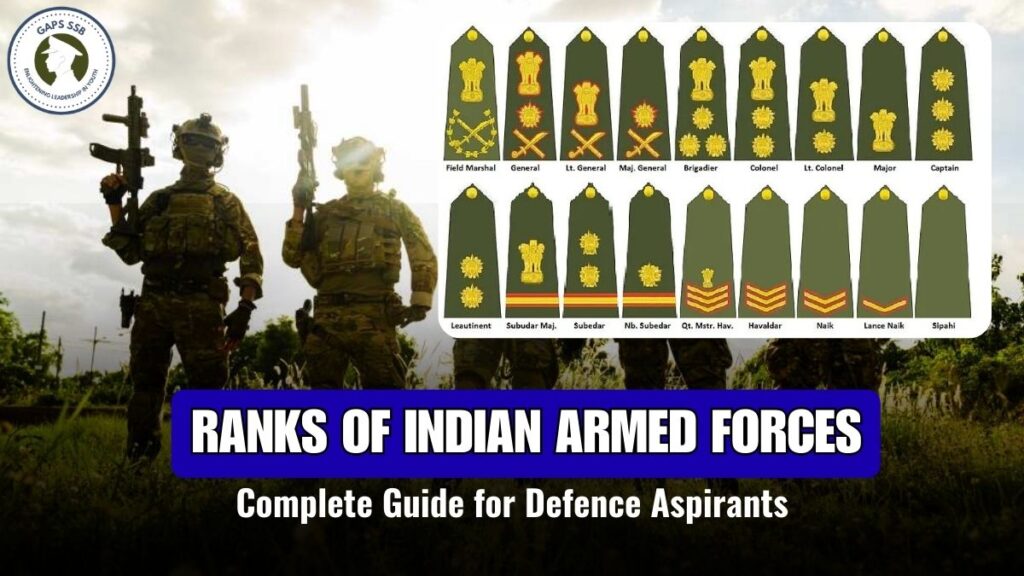
Understanding the Equivalent ranks of Indian Armed Forces is essential for defence aspirants preparing for competitive exams and personality assessments. The Indian Armed Forces consist of three services — the Indian Army, Indian Navy, and Indian Air Force — and each service follows a structured hierarchy of ranks. Although the titles differ across the services, their authority levels are considered equivalent. Learning the Equivalent ranks of Indian Armed Forces helps aspirants understand how officers from different services correspond to each other in terms of command and responsibility. For candidates preparing for defence interviews and personality assessments, knowledge about the Equivalent ranks of Indian Armed Forces also reflects awareness about military organization and leadership structure. What Are the Equivalent Ranks of Indian Armed Forces? The Equivalent ranks of Indian Armed Forces refer to the matching officer ranks between the Army, Navy, and Air Force. Even though each service uses different terminology, the command level and responsibilities are aligned. For example: Understanding these Equivalent ranks of Indian Armed Forces is important because officers from all three services often work together in joint military operations. Commissioned Officer Ranks – Indian Armed Forces Below is a simplified comparison of the Equivalent ranks of Indian Armed Forces across the three services. 5-Star Rank (Ceremonial) 4-Star Rank 3-Star Rank 2-Star Rank 1-Star Rank Senior Officer Rank Mid-Level Officer Rank Junior Officer Rank Entry Level Officer Rank Initial Commission Rank This structure clearly shows the Equivalent ranks of Indian Armed Forces across the three services. Ranks of Indian Army The ranks of Indian Army follow a clear hierarchy from junior officers to the highest military leadership. Here is the army rank list for commissioned officers: This army rank list represents the complete officer hierarchy within the Indian Army. Army Rank List in Order For aspirants preparing for defence exams, it is important to remember the army rank list in order. The army rank list in order starts from the junior-most officer rank and progresses to the highest leadership position. Army Rank List in Order: Lieutenant → Captain → Major → Lieutenant Colonel → Colonel → Brigadier → Major General → Lieutenant General → General → Field Marshal Learning the army rank list in order helps candidates understand the chain of command within the Army. Highest Rank in Indian Army One of the most frequently asked questions is about the highest rank in Indian army. The highest rank in Indian army during active service is General, which is held by the Chief of Army Staff. However, the ceremonial highest rank in indian army is Field Marshal, which is awarded only in exceptional circumstances. This rank is rarely conferred and represents the highest military honor. Understanding the highest rank in indian army is important when studying the Equivalent ranks of Indian Armed Forces. Salary Structure in Indian Armed Forces After the implementation of the 7th Central Pay Commission, the salary structure for officers in the Indian Armed Forces was revised. The pay levels correspond to the rank hierarchy within the Equivalent ranks of Indian Armed Forces system. Indian Army Salary Overview In addition to basic salary, officers receive allowances such as: These benefits apply across the Equivalent ranks of Indian Armed Forces depending on the service branch. Importance of Knowing Equivalent Ranks Understanding the Equivalent ranks of Indian Armed Forces is important for several reasons. 1. Joint Military Operations The Army, Navy, and Air Force frequently work together during military operations. Knowledge of the Equivalent ranks of Indian Armed Forces ensures smooth coordination. 2. Defence Examination Preparation Many defence examinations include questions related to the army rank list, army rank list in order, and the highest rank in indian army. 3. Personality Assessments Candidates appearing for officer selection interviews are often expected to understand the structure of the military hierarchy. Therefore, learning the Equivalent ranks of Indian Armed Forces is a crucial part of defence awareness. Conclusion The Equivalent ranks of Indian Armed Forces help establish a unified hierarchy between the Indian Army, Navy, and Air Force. Even though the titles differ, their responsibilities and command levels are aligned across the services. From the entry-level ranks such as Lieutenant, Sub Lieutenant, and Flying Officer to the senior-most ranks like General, Admiral, and Air Chief Marshal, the system ensures a clear chain of command. For defence aspirants studying the ranks of indian army, the army rank list, and the army rank list in order, understanding the Equivalent ranks of Indian Armed Forces is essential. It provides a deeper insight into how the three services operate together to protect the nation.