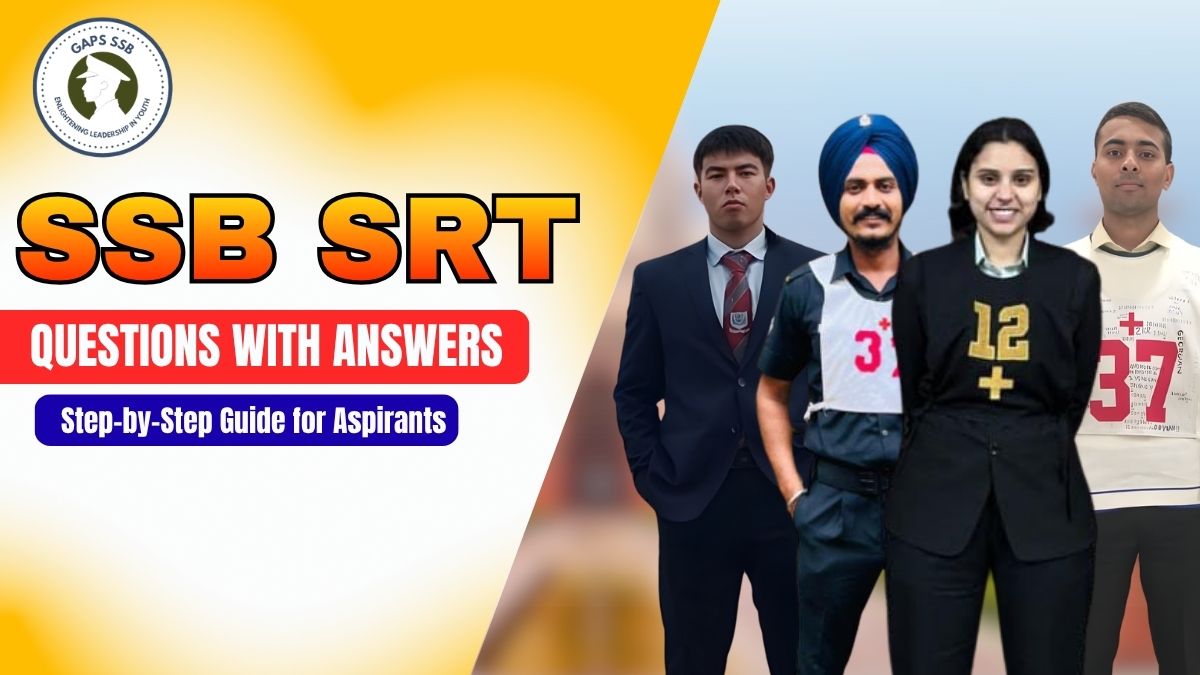
The Situation Reaction Test is one of the most important parts of the SSB interview process. It plays a crucial role in assessing a candidate’s natural thinking ability, decision-making skills, and overall personality under pressure. For every defence aspirant, mastering SRT Practice for SSB is essential to improve performance and increase chances of recommendation.
At GAPS SSB, candidates are trained to approach the Situation Reaction Test with clarity, confidence, and a practical mindset—helping them respond effectively in real-time situations.
What is the Situation Reaction Test?
The Situation Reaction Test is a psychological assessment conducted during the SSB interview. In this test:
- Candidates are given 60 real-life situations
- Total time is 30 minutes
- Each situation must be answered quickly and logically
The purpose of the test is to evaluate how a candidate reacts in everyday life challenges. These responses reflect qualities like leadership, responsibility, courage, and presence of mind.
Why is SRT Important in SSB?
The Situation Reaction Test helps assess:
- Decision-making ability
- Problem-solving skills
- Emotional stability
- Social responsibility
- Leadership qualities
Unlike theoretical exams, SSB SRT Practice focuses on your natural reactions rather than memorized answers.
Key Features of Situation Reaction Test
- Situations are based on daily life scenarios
- Written in past tense and third person
- Require quick and logical responses
- Answers must be positive, practical, and complete
At GAPS SSB, aspirants are taught how to maintain consistency and clarity while practicing SRT Practice for SSB.
How to Attempt SRT Effectively
To perform well in the Situation Reaction Test, follow these strategies:
1. Be Natural and Honest
Avoid artificial or unrealistic answers. Your response should reflect your true personality.
2. Stay Positive
Always show a solution-oriented mindset, even in difficult situations.
3. Be Quick and Clear
Time management is crucial. Do not overthink—write your first logical reaction.
4. Show Responsibility
Take initiative and demonstrate leadership wherever possible.
5. Avoid Incomplete Responses
Do not leave situations unanswered. Attempt all 60 questions.
Sample SRT Practice for SSB with Answers
Here are some examples to help you understand how to respond during SSB SRT Practice:
Situation 1
He met with a serious accident while riding a bicycle, and the pillion rider was injured.
Response: Took the injured person to the nearest hospital and informed family members.
Situation 2
He saw fire in a village and people were panicking.
Response: Calmed people, organized help to control the fire, and informed fire services.
Situation 3
He was going for an interview and got dirty due to a passing vehicle.
Response: Cleaned himself as much as possible and reached the interview on time.
Situation 4
He saw miscreants trying to loot passengers in a train.
Response: Alerted others, informed authorities, and helped in controlling the situation.
Situation 5
His close friend misunderstood and hit him.
Response: Stayed calm, resolved misunderstanding, and maintained friendship.
Situation 6
He found a person teasing a girl in a lonely place.
Response: Intervened immediately, stopped the person, and ensured the girl’s safety.
Situation 7
He was preparing for exams but his father was ill.
Response: Managed time efficiently, took care of his father, and continued studies.
Situation 8
He boarded the wrong train.
Response: Got down at the next station and boarded the correct train after checking details.
These examples show how SRT Practice for SSB should focus on practical, responsible, and positive actions.
Common Mistakes to Avoid in SSB SRT Practice
While preparing for the Situation Reaction Test, avoid these mistakes:
- Writing unrealistic or heroic answers
- Leaving situations incomplete
- Showing negative or passive behavior
- Taking too much time per question
- Copying memorized responses
At GAPS SSB, candidates are trained to avoid these errors through structured SSB SRT Practice sessions.
Tips to Improve SRT Performance
Practice Daily
Solve at least 20–30 situations regularly to build speed.
Improve Thinking Ability
Focus on real-life problem-solving and decision-making.
Stay Calm Under Pressure
Practice writing within time limits.
Develop OLQs
Work on leadership, responsibility, and initiative.
How GAPS SSB Helps in SRT Preparation
GAPS SSB provides complete support for mastering the Situation Reaction Test:
- Daily SRT practice sessions
- Real-time timed tests
- Personalized feedback
- Psychological guidance
- Personality development training
This helps candidates improve their performance in SSB SRT Practice and build confidence for the actual test.
Final Words
The Situation Reaction Test is not just about writing answers—it is about revealing your true personality and decision-making ability. With consistent SRT Practice for SSB, you can significantly improve your speed, clarity, and confidence.
Focus on being natural, practical, and positive in your responses. Avoid shortcuts and build real Officer Like Qualities.
With proper guidance from GAPS SSB, you can master the SSB SRT Practice and move one step closer to achieving your dream of becoming a defence officer.