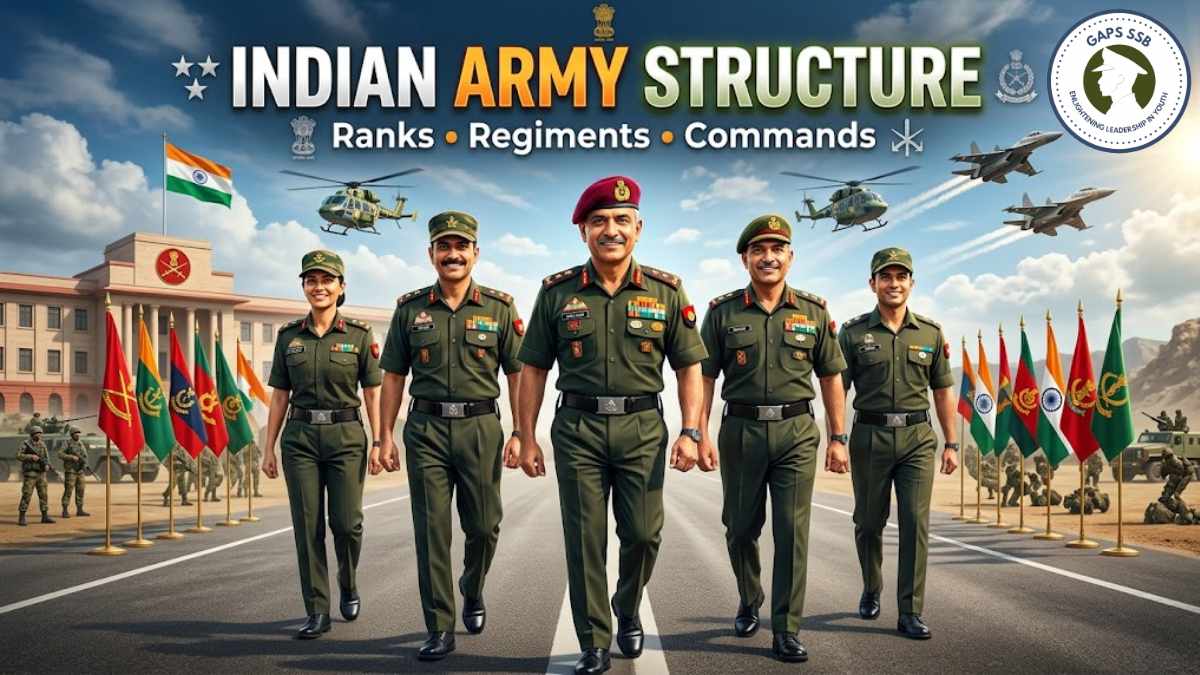
When millions of citizens sleep peacefully at night, it is the Indian Army that stands vigilant across deserts, mountains, forests, and borders. Built on the timeless value of “Service Before Self,” the Indian Army is not just a force—it is a symbol of courage, discipline, and sacrifice.
For defence aspirants preparing for SSB, understanding Indian Army ranks, Indian Army regiments, Indian Army commands, and overall structure is essential. At GAPS SSB, widely known for providing the best SSB coaching in Delhi, candidates are trained to master such core defence topics with clarity and confidence.
Indian Army Structure – The Backbone of Defence
The Indian Army commands form the operational backbone of the force. The Army is divided into:
- 7 Operational Commands
- 1 Training Command
Each command is responsible for a specific geographical area and ensures round-the-clock readiness to tackle threats across different terrains.
From high-altitude regions to coastal areas, every command plays a crucial role in national security.
Indian Army Ranks – Leadership Hierarchy Explained
Understanding Indian Army ranks is one of the most important topics for SSB interviews. The hierarchy reflects leadership responsibility and command structure.
🎖 Commissioned Officers – The Leaders
These are the officers selected through entries like NDA, CDS, and SSC. They lead troops and make strategic decisions.
- Lieutenant
- Captain
- Major
- Lieutenant Colonel
- Colonel
- Brigadier
- Major General
- Lieutenant General
- General
At GAPS SSB, special focus is given to helping aspirants understand these roles clearly, as questions on ranks are common in interviews.
🏅 Junior Commissioned Officers (JCOs)
They act as a bridge between officers and soldiers.
- Subedar Major
- Subedar
- Naib Subedar
JCOs are highly respected for their experience and ground-level leadership.
🪖 Other Ranks – The Backbone Soldiers
These are the warriors who execute missions on the ground:
- Havildar
- Naik
- Lance Naik
- Sepoy
Their courage and dedication form the foundation of the Army’s strength.
Arms vs Services – Who Fights & Who Supports?
A key concept often asked in SSB interviews is the difference between Arms and Services.
Combat Arms (Fighting Units)
These units engage directly with the enemy:
- Infantry
- Armoured Corps
- Mechanised Infantry
- Artillery
- Army Aviation
- Engineers
- Air Defence
- Signals
- Special Forces
Services (Support Units)
These ensure operational efficiency:
- Logistics and supply
- Medical support
- Equipment maintenance
- Military policing
- Intelligence
The Army wins battles not only through firepower but also through strong support systems.
Indian Army Regiments – The Soul of the Army
The Indian Army regiments are the pride and identity of soldiers. Each regiment has its own traditions, history, and war cry.
Top 10 Regiment in Indian Army (Popular & Respected)
- Rajput Regiment
- Sikh Regiment
- Gorkha Rifles
- Maratha Light Infantry
- JAT Regiment
- Assam Regiment
- Kumaon Regiment
- Dogra Regiment
- Garhwal Rifles
- Parachute Regiment (Special Forces)
These regiments are known for their bravery, discipline, and unmatched legacy.
Special Forces – Elite Warriors
Among all units, Special Forces are the most elite.
- Conduct high-risk operations
- Trained for all terrains
- Experts in covert missions
Selection is extremely tough, and only the most capable candidates make it through.
Field Army Structure – Chain of Command
The operational hierarchy of the Army flows as:
Command → Corps → Division → Brigade → Battalion → Company → Platoon → Section
This structure ensures efficient command and coordination during operations.
Army Aviation & Modern Warfare
Modern warfare has transformed significantly with technology.
Army aviation supports:
- Surveillance missions
- Medical evacuation
- Troop transport
- Tactical operations
These capabilities enhance the effectiveness of ground forces in real-time combat situations.
Training Institutes – Where Officers Are Made
The Indian Army develops leaders through world-class training institutions:
- National Defence Academy
- Indian Military Academy
- Officers Training Academy
- Advanced military training establishments
These institutions shape individuals into disciplined and responsible officers.
Why This Topic is Important for SSB
Understanding Indian Army ranks, regiments, and commands is crucial for:
- Personal Interview (PI)
- Group Discussion (GD)
- Lecturette topics
Common Questions Asked:
- Explain Indian Army rank structure
- What are Indian Army commands?
- Which regiment do you want to join and why?
- Difference between Arms and Services
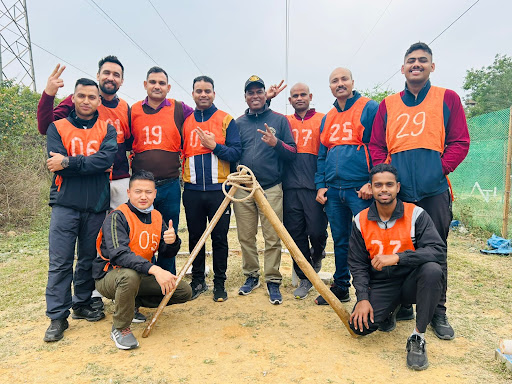
At GAPS SSB, aspirants are trained to answer such questions with clarity, confidence, and officer-like thinking.
How GAPS SSB Helps You Prepare
Cracking the SSB requires more than knowledge—it requires personality, confidence, and leadership qualities.
GAPS SSB provides:
- Complete SSB interview preparation
- Psychological test training (TAT, WAT, SRT)
- Real-time GTO task practice
- Personal interview guidance
- Personality development and OLQ enhancement
The focus is on transforming aspirants into future officers of the Indian Armed Forces.
The Spirit of the Indian Army
Every soldier represents:
- Courage in action
- Discipline in life
- Sacrifice for the nation
The Indian Army stands strong with one unwavering belief:
Nation First – Always and Every Time 🇮🇳
Final Words
Understanding the Indian Army ranks, Indian Army regiments, Indian Army commands, and structure is not just important for exams—it is essential for becoming an officer.
If your dream is to serve the nation in uniform, start your preparation with the right guidance. With expert mentorship from GAPS SSB, you can build the confidence and knowledge required to succeed in the SSB interview.