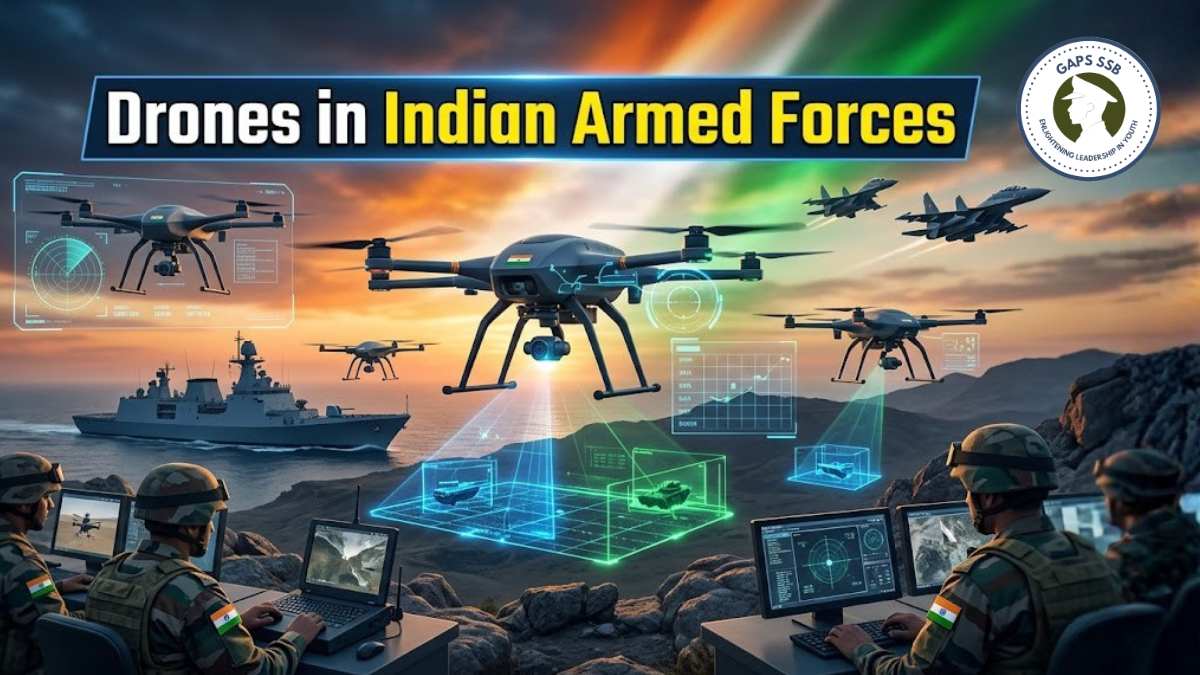
Modern warfare is rapidly evolving, and one of the most transformative technologies shaping the battlefield is the use of drones in Indian Armed Forces. Also known as Unmanned Aerial Vehicles (UAVs), drones have become essential for surveillance, reconnaissance, combat operations, and intelligence gathering.
For defence aspirants preparing for SSB interviews, understanding the role of UAVs is extremely important. At GAPS SSB, recognized for providing the best SSB coaching in Delhi, candidates are trained to develop awareness of modern military technologies like drones—an important topic frequently discussed in interviews and group tasks.
What Are Drones or UAVs?
Drones, or UAVs (Unmanned Aerial Vehicles), are aircraft that operate without a human pilot onboard. They are part of a broader system called Unmanned Aircraft Systems (UAS), which includes:
- The UAV itself
- Ground control stations
- Communication systems
These systems allow remote operation or autonomous functioning, making them highly effective in high-risk environments.
Purpose of Drones in Indian Armed Forces
The primary objectives of drones in military operations include:
- Surveillance and reconnaissance
- Intelligence gathering
- Target acquisition
- Combat missions in hostile areas
- Border monitoring
- Search and rescue operations
Drones significantly reduce risks to human life, especially in difficult terrains like mountains, deserts, and maritime zones.
Types of Drones in Indian Armed Forces
Understanding the types of drones in Indian Armed Forces is crucial for defence aspirants. These UAVs are broadly categorized based on their role and capabilities:
1. Surveillance and Reconnaissance Drones
Used for intelligence gathering and monitoring enemy movement.
2. Combat or Attack Drones
Also known as Indian attack drone systems, these UAVs are equipped with weapons for precision strikes.
3. Mini and Micro UAVs
Small, portable drones used by soldiers for short-range surveillance.
4. Long-Endurance Drones
Designed for extended missions, capable of staying airborne for long durations.
5. Target and Training Drones
Used for military training and target practice.
Functions of Military Drones
Remote Sensing
Drones use advanced sensors such as infrared cameras, radar, and electromagnetic systems to collect real-time data.
ISTAR Operations
They provide Intelligence, Surveillance, Target Acquisition, and Reconnaissance (ISTAR) capabilities, enhancing battlefield awareness.
Counter-IED Operations
Drones help detect explosive devices in conflict zones, reducing risks to soldiers.
Border Surveillance
They play a critical role in monitoring sensitive borders like high-altitude and coastal regions.
Search and Rescue Missions
Drones assist in locating survivors during natural disasters and emergencies.
List of Drones in Indian Armed Forces
Here is a list of drones in Indian Armed Forces that are either operational or under development:
- Nishant UAV
- Rustom Series (Rustom-I, II, etc.)
- Netra UAV
- Imperial Eagle
- Lakshya (Pilotless Target Aircraft)
- Panchi UAV
These drones serve various roles including surveillance, reconnaissance, training, and tactical operations.
Top 10 Military Drones in India
When discussing the Top 10 military drones in India, the focus is on capability, endurance, and operational usage:
- Nishant UAV
- Rustom-II
- Netra UAV
- Imperial Eagle
- Lakshya
- Panchi UAV
- Mini tactical UAVs
- Long-endurance surveillance UAVs
- Combat UAV prototypes
- High-altitude reconnaissance drones
These systems highlight India’s growing strength in unmanned warfare technology.
Latest Drone in Indian Army
The latest drone in Indian Army includes advanced UAVs under development that focus on:
- Stealth capability
- Autonomous operations
- High endurance
- Precision strike ability
Future combat drones are expected to play a major role in network-centric warfare.
How Many Drones in Indian Armed Forces?
A common question among aspirants is “how many drones in Indian Armed Forces?”
While exact numbers are classified for security reasons, it is known that:
- All three services (Army, Navy, Air Force) operate multiple UAV systems
- The number is steadily increasing due to modernization
- There is a strong push towards indigenous drone development
Indian Attack Drone List and Combat Capabilities
The Indian attack drone list is expanding as the country focuses on strengthening offensive capabilities. These drones are designed for:
- Precision strikes
- Destroying enemy air defense systems
- Supporting surgical operations
- High-risk mission execution without pilot risk
Their role is especially crucial in border conflicts and counter-terror operations.
Future of Drones in Indian Armed Forces
The future of UAVs in India is extremely promising. Key developments include:
- Stealth combat drones
- Artificial Intelligence-based UAVs
- Swarm drone technology
- Enhanced surveillance systems
Drones are no longer limited to reconnaissance—they are now central to modern warfare strategy.
Why This Topic is Important for SSB Aspirants
Understanding drones in Indian Armed Forces (like topics often searched on “drones in Indian armed forces wikipedia”) is essential for:
- Personal Interview (PI)
- Group Discussion (GD)
- Lecturette topics
- Current affairs awareness
At GAPS SSB, candidates are trained not just academically but also in developing awareness about defence technologies, ensuring they are well-prepared for every stage of the SSB process.
Why Choose GAPS SSB for Defence Preparation?
If you are preparing for NDA, CDS, AFCAT, or other entries, choosing the right guidance is crucial.
GAPS SSB – Best SSB Coaching in Delhi offers:
- Structured SSB interview training
- Expert mentorship from defence professionals
- Real-time GTO task practice
- Psychological test preparation (TAT, WAT, SRT)
- Personality development and OLQ enhancement
The institute focuses on building confident, capable candidates ready to serve in the Armed Forces.
Conclusion
Drones have become a powerful force multiplier in modern warfare. From surveillance to combat operations, their role in the Indian Armed Forces is expanding rapidly.
For defence aspirants, having a clear understanding of UAVs, their types, functions, and future scope is essential. With the right guidance from institutes like GAPS SSB, you can stay ahead in your preparation and confidently face the SSB interview process.