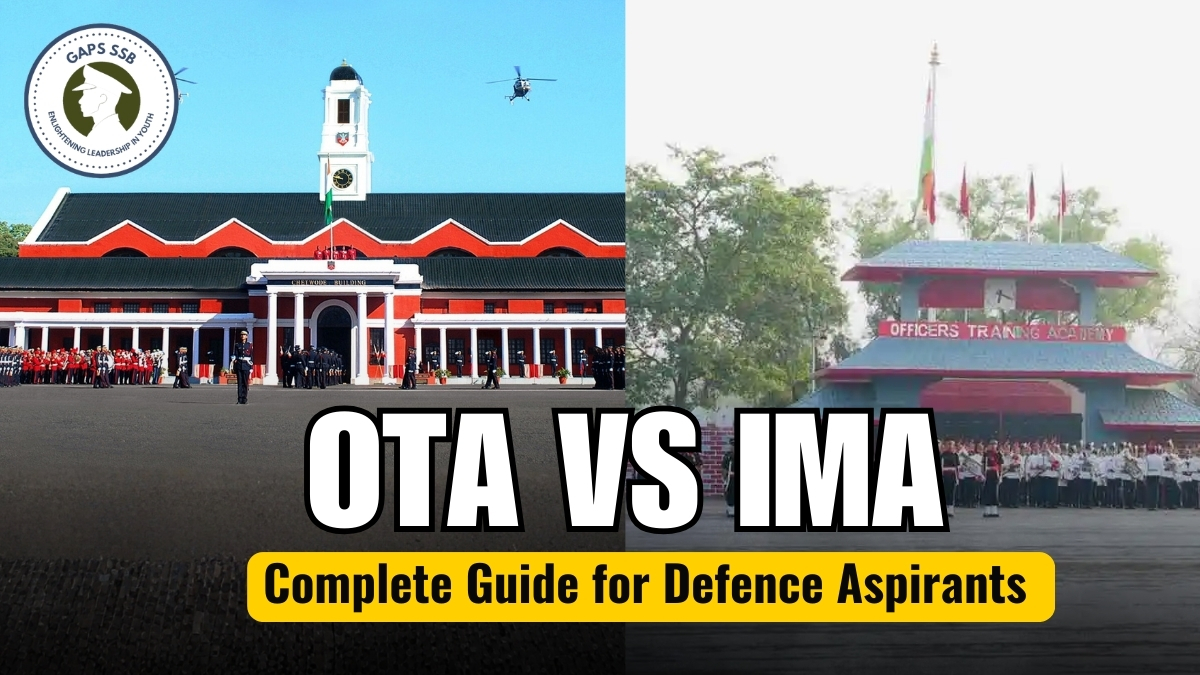
One of the most common questions among defence aspirants is the Difference Between OTA & IMA. Candidates preparing for exams like CDS, NDA, and other entries often get confused between these two prestigious training academies.
Understanding the Difference Between OTA & IMA is essential because both academies train officers for the Indian Army, but the nature of service, training duration, and career opportunities differ significantly.
In this article, we will explain IMA VS OTA in a simple, clear, and exam-oriented manner to help you make the right career decision.
Overview of IMA VS OTA
Before going deep into the Difference Between OTA & IMA, let’s understand what these academies are:
- IMA (Indian Military Academy, Dehradun) – Trains officers for Permanent Commission (PC) in the Indian Army.
- OTA (Officers Training Academy, Chennai & Gaya) – Trains officers mainly for Short Service Commission (SSC).
This basic distinction forms the foundation of the Difference Between OTA & IMA.
Difference Between OTA & IMA – Commission Type
The most important Difference Between OTA & IMA is the type of commission offered.
IMA
- Offers Permanent Commission
- Officers serve till retirement (full career in Army)
OTA
- Offers Short Service Commission (SSC)
- Service duration: 10 years + 4 years extension (optional)
This is the biggest deciding factor when comparing IMA VS OTA.
Difference Between OTA & IMA – Eligibility
Another key Difference Between OTA & IMA is eligibility criteria.
IMA Eligibility
- Only male candidates (through CDS entry)
- Age: 19–24 years
- Graduation required
OTA Eligibility
- Both male and female candidates
- Age: 19–25 years
- Graduation required
This makes OTA more inclusive, which is an important point in the Difference Between OTA & IMA.
Difference Between OTA & IMA – Entry Process
Understanding the exam pattern is also part of the Difference Between OTA & IMA.
IMA Entry (CDS Exam)
- English
- General Knowledge
- Mathematics
OTA Entry (CDS Exam)
- English
- General Knowledge
Since OTA does not include Mathematics, this becomes a noticeable Difference Between OTA & IMA for aspirants.
Difference Between OTA & IMA – Training Duration
Training duration is another important Difference Between OTA & IMA.
IMA
- Training duration: 1.5 years (approximately)
OTA Chennai
- Training duration: 49 weeks (less than 1 year)
This shorter training period is a key highlight in the Difference Between OTA & IMA.
Difference Between OTA & IMA – Career Opportunities
Career growth also defines the Difference Between OTA & IMA.
IMA
- Long-term career
- Higher chances of reaching senior ranks
- Stable career path
OTA
- Short-term service (SSC)
- Option to switch to civilian career later
- Opportunity to opt for Permanent Commission (limited cases)
This career flexibility is a major point in IMA VS OTA comparison.
Difference Between OTA & IMA – Promotion & Growth
Another crucial Difference Between OTA & IMA is promotion opportunities.
- IMA officers generally have better long-term promotion prospects
- OTA officers may face limitations unless granted Permanent Commission
However, performance always plays a key role, even in IMA VS OTA scenarios.
Difference Between OTA & IMA – Salary
When it comes to salary, there is no major Difference Between OTA & IMA.
- Both IMA and OTA officers receive similar pay as per rank
- Salary starts around ₹70,000+ with allowances
- Includes Military Service Pay, DA, and other benefits
So, in terms of pay, IMA VS OTA remains equal.
Difference Between OTA & IMA – Women Entry
A very important Difference Between OTA & IMA is related to women candidates.
- IMA (via CDS) is traditionally for male candidates
- OTA allows both men and women
Thus, OTA is the primary route for women aspirants, making it a key highlight in the Difference Between OTA & IMA.
IMA VS OTA – Which One Should You Choose?
Choosing between IMA VS OTA depends on your personal goals.
Choose IMA if:
- You want a long-term Army career
- You aim for higher ranks
- You prefer job stability
Choose OTA if:
- You want short-term service
- You want flexibility after 10–14 years
- You are a female aspirant
Your career vision should guide your decision in IMA VS OTA.
Importance for GAPS SSB Preparation
For candidates preparing for SSB interviews, especially at GAPS SSB, understanding the Difference Between OTA & IMA is very important.
In personal interviews and group discussions, questions like:
- Why IMA or OTA?
- What is the Difference Between OTA & IMA?
- Which entry suits your career goals?
are commonly asked.
A clear understanding of IMA VS OTA helps candidates give confident and structured answers, which creates a strong impression during SSB selection.
Final Conclusion
The Difference Between OTA & IMA lies mainly in commission type, training duration, eligibility, and career opportunities.
While IMA offers a full-fledged career through Permanent Commission, OTA provides flexibility with Short Service Commission and options beyond the military.
There is no “better” option in IMA VS OTA — the right choice depends on your career goals, mindset, and long-term vision.
For defence aspirants preparing seriously, especially for interviews like GAPS SSB, having a clear understanding of the Difference Between OTA & IMA can make a significant difference in selection.