SSC Tech Entry 2026 – Cut Off, Eligibility, Notification
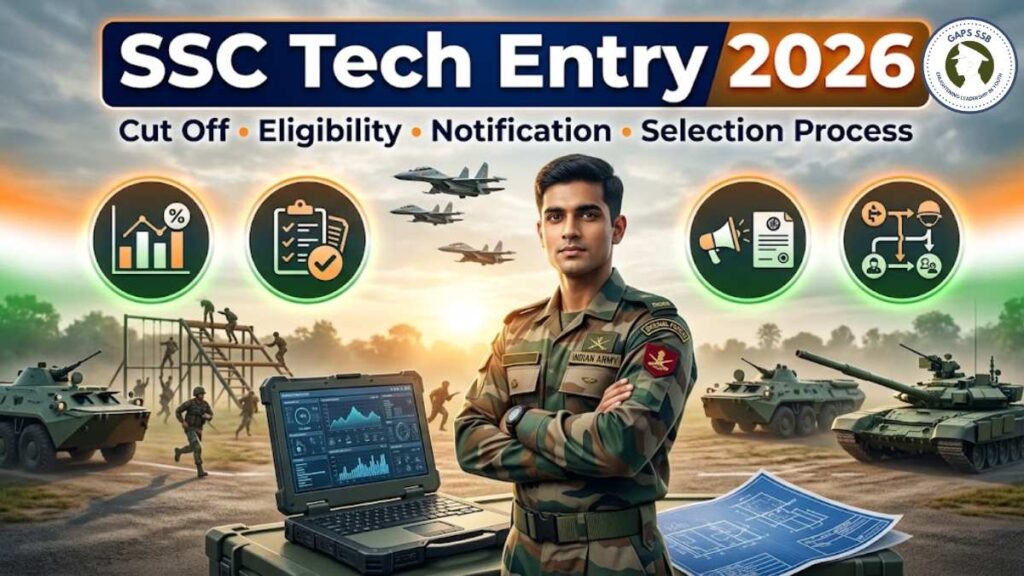
The SSC Tech Entry 2026 notification has been officially released, bringing a golden opportunity for engineering graduates to join the Indian Army as officers through the Short Service Commission (Technical) entry. Candidates eagerly searching for details like SSC Tech 2026 cut off, SSC Tech 67 notification 2026, and Indian Army SSC Tech Recruitment 2026 can now begin their preparation with clarity and confidence. At GAPS SSB – Best SSB Coaching in Delhi, aspirants receive complete guidance not only for SSB preparation but also for understanding the latest trends, cut-offs, and selection strategies for SSC Tech entries. SSC Tech 2026 Important Dates As per the latest update: Candidates should apply early to avoid last-minute issues and ensure proper documentation. SSC Tech 2026 Cut Off (Expected & Trends) The SSC Tech 2026 cut off depends on engineering branches and competition level. Based on recent trends: Overall Expected Cut-Off: This indicates that candidates with 65–70%+ marks have a strong chance of getting shortlisted for the SSB interview. SSC Tech 2026 Cut Off for Female Candidates The SSC Tech 2026 cut off for female candidates is generally similar or slightly higher compared to male candidates due to limited vacancies and higher competition. Female aspirants are advised to aim for 70%+ aggregate to stay on the safer side for shortlisting. SSC Tech 66 Cutoff vs SSC Tech 67 Cutoff Understanding previous trends helps in better preparation: This trend clearly shows rising competition in Indian Army SSC Tech Recruitment 2026. SSC Tech Entry 2026 Eligibility Criteria Before applying, candidates must meet the following eligibility: ✔️ Educational Qualification: ✔️ Age Limit: ✔️ Gender: Selection Process of SSC Tech Entry Unlike NDA or CDS, SSC Tech Entry 2026 does not have a written exam. Selection is based on: This makes your academic performance and SSB preparation extremely important. Factors Affecting SSC Tech 2026 Cut Off The SSC Tech 67 cutoff is influenced by several factors: Why SSC Tech Entry 2026 is a Golden Opportunity Why Choose GAPS SSB for SSC Tech Preparation? Clearing the cut-off is just the first step—the real challenge is the SSB Interview. At GAPS SSB, candidates get: GAPS SSB helps aspirants convert their shortlist into final recommendation. Final Words The release of the SSC Tech 2026 cut off clearly highlights the increasing competition in defence entries. With the SSC Tech 67 notification 2026, candidates must focus on maintaining strong academic scores and starting SSB preparation early. If you are serious about joining the Indian Army through SSC Tech Entry 2026, now is the right time to act. With the right strategy and expert guidance from GAPS SSB, you can significantly improve your chances of selection. FAQs Q1. What is SSC Tech 2026 cut off?It is the minimum percentage required for shortlisting candidates for SSB Interview. Q2. What is SSC Tech 67 cutoff?The expected cutoff is around 67% aggregate in engineering. Q3. What is SSC Tech 2026 cut off for female candidates?It is similar or slightly higher; aiming for 70%+ is recommended. Q4. Is there a written exam in SSC Tech Entry 2026?No, selection is based on academic marks + SSB Interview. Q5. When will SSC Tech 67 shortlist date be released?It will be announced after the application process is completed.
NDA 1 2026 Answer Key
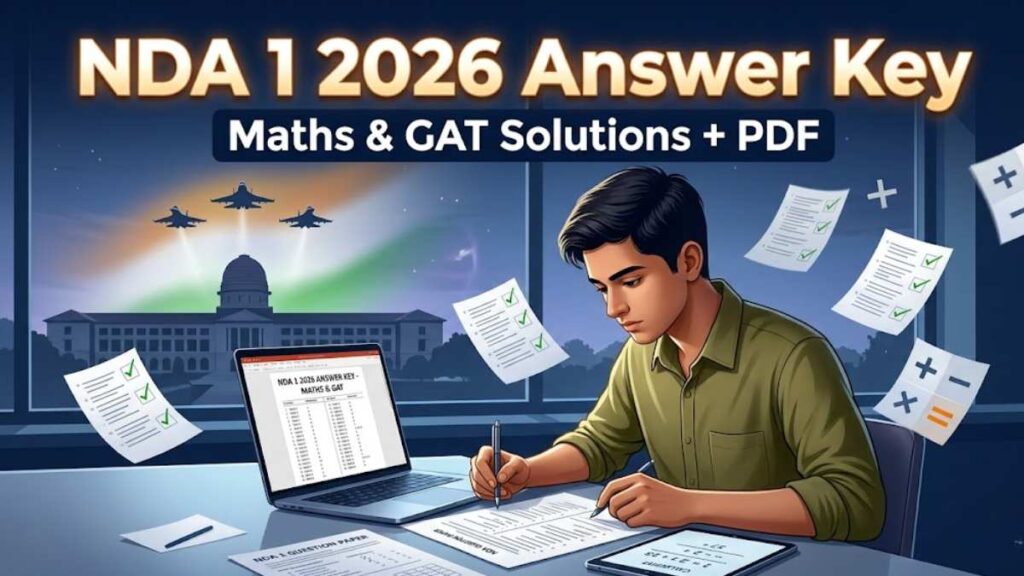
The NDA 1 2026 Answer Key is one of the most awaited resources for defence aspirants who are appearing for the exam on 12 April 2026. As of now, the NDA 1 2026 answer key has not been released. It will be released after the exam, usually on the same day or later by the official authority. Candidates searching for the NDA 1 2026 answer key pdf free download will be able to access it once it is officially available. After the release, you can easily download the answer key for both Mathematics (Paper 1) and GAT from here to check your performance, calculate your score, and estimate your chances of clearing the written exam and moving ahead to the SSB Interview stage. At GAPS SSB – Best SSB Coaching in Delhi, aspirants are guided not only for written exam preparation but also for the complete SSB process after clearing the NDA exam. NDA 1 2026 Answer Key – Latest Updates Candidates can now access the NDA 1 2026 answer key pdf download for all sets and evaluate their performance. 📥 NDA 1 2026 Answer Key PDF (All Sets – A, B, C, D) NDA Paper Set A Set B Set C Set D Maths Answer Key (Paper 1) Download Download Download Download GAT Answer Key Download Download Download Download Maths Question Paper Download Download Download Download GAT Question Paper Download Download Download Download What is NDA 1 2026 Answer Key? The NDA 1 2026 answer key contains the correct answers to all questions asked in the exam. It is useful for: NDA 1 2026 Exam Overview How to Calculate NDA 1 2026 Score Using the NDA 1 2026 answer key paper 1 and GAT answers, you can calculate your score with the marking scheme: Marking Scheme: Formula: Final Marks = (Correct × Marks) – (Wrong × ⅓ × Marks) Example (Maths): Example (GAT): 👉 This helps you estimate your chances of clearing the cutoff. NDA 1 2026 Question Paper PDF Along with the NDA 1 2026 answer key pdf download, candidates can also access: Practicing these papers helps in understanding the exam pattern and difficulty level. NDA 1 2026 Exam Pattern NDA 1 2026 Syllabus Highlights Mathematics: GAT: What After NDA Written Exam? After clearing the written exam using your estimated score from the NDA 1 2026 answer key, the next step is the SSB Interview. SSB Process (5 Days): This stage evaluates personality, leadership, and decision-making skills. Medical Examination Candidates recommended by SSB undergo medical tests including: NDA 1 2026 Preparation Tips Why Choose GAPS SSB After NDA Written Exam? Clearing the written exam is just the first step. To succeed in the SSB Interview, proper guidance is essential. GAPS SSB – Best SSB Coaching in Delhi provides: GAPS SSB helps candidates convert their written exam success into final selection. Conclusion The NDA 1 2026 answer key is an essential tool for analyzing your exam performance and planning your next step. By using the NDA 1 2026 answer key pdf free download, you can calculate your score, understand your standing, and prepare for the SSB Interview accordingly. With the right strategy and expert guidance from GAPS SSB, you can move confidently toward your dream of joining the Indian Armed Forces. FAQs Q1. When will NDA 1 2026 answer key be released?It is released on the same day of the exam in the evening (unofficial). Q2. How to download NDA 1 2026 answer key pdf?You can access the NDA 1 2026 answer key pdf download from reliable coaching sources. Q3. How to calculate marks using answer key?Use the marking scheme and formula to estimate your score. Q4. What is NDA 1 2026 answer key paper 1?It refers to the Mathematics answer key. Q5. What after NDA written exam?Candidates who clear the exam appear for the 5-day SSB Interview.
Which SSB Coaching Has the Highest Selection Rate?
Choosing the right coaching institute can make a significant difference in your journey towards becoming an officer in the Indian Armed Forces. One of the most common questions asked by aspirants is: “Which SSB coaching has the highest selection rate?” The answer lies not just in numbers, but in the quality of training, mentorship, and real personality development—and this is where GAPS SSB stands out as a leading name among defence aspirants. Why Selection Rate Matters in SSB Coaching The selection rate of an SSB coaching institute reflects how effectively it prepares candidates for the real Services Selection Board process. Unlike written exams, SSB focuses on personality, leadership, and Officer Like Qualities (OLQs), which cannot be developed through theoretical learning alone. A coaching institute with a high selection rate ensures: GAPS SSB – Coaching with the Highest Selection Rate When discussing which SSB coaching has the highest selection rate, GAPS SSB is widely recognized as one of the most trusted and result-oriented institutes. With 700+ successful recommendations and over a decade of experience, GAPS SSB has built a strong reputation for delivering consistent results. The institute focuses on quality training over quantity, ensuring that every candidate receives personal attention and structured guidance. What Makes GAPS SSB Different? The reason behind the high selection rate at GAPS SSB is its unique and practical approach to SSB preparation. 1. Focus on Real Officer Like Qualities (OLQs) Instead of teaching artificial responses, GAPS SSB trains candidates to develop genuine leadership, confidence, and decision-making skills. 2. Experienced Defence Mentors Training is provided by experts with defence backgrounds who understand the actual expectations of SSB assessors. 3. Complete SSB Preparation Program The institute covers every stage of the SSB process: 4. Real-Time Practice & Feedback Candidates undergo regular mock sessions that simulate actual SSB conditions, followed by detailed feedback for improvement. 5. Personality Development & Confidence Building Special sessions are conducted to improve communication, body language, and overall personality. How GAPS SSB Maintains a High Selection Rate The highest selection rate at GAPS SSB is not by chance—it is the result of a structured training system: This approach ensures candidates are fully prepared for all five days of the SSB process. What Should You Look for in SSB Coaching? If you are still wondering which SSB coaching has the highest selection rate, here are some factors to consider: GAPS SSB checks all these boxes, making it a top choice for serious aspirants. Final Thoughts The journey to becoming an officer requires more than just preparation—it requires the right guidance, discipline, and mindset. If you are searching for which SSB coaching has the highest selection rate, GAPS SSB stands out as a reliable and result-driven institute that has consistently helped aspirants achieve their goals. With expert mentorship, structured training, and a focus on real personality development, GAPS SSB not only prepares you for the SSB Interview but also helps you grow into a confident and capable future officer.
SSB Exam – Eligibility, Syllabus, Age Limit & Selection Process
The SSB Exam (Services Selection Board Interview) is a crucial step for candidates aspiring to become officers in the Indian Armed Forces. Unlike traditional exams, the SSB does not just test academic knowledge—it evaluates a candidate’s personality, leadership skills, communication ability, and decision-making under pressure. Every year, thousands of aspirants appear for the SSB Interview after clearing written exams like NDA, CDS, and AFCAT, but only a few get recommended. At GAPS SSB – Best SSB Coaching in Delhi, candidates are trained with a structured and practical approach to successfully clear the SSB Exam Selection Process by developing real Officer Like Qualities (OLQs). What is the SSB Exam? The SSB Exam is a 5-day selection process conducted to recruit officers for the Indian Army, Navy, and Air Force. It is designed to assess whether a candidate has the qualities required to lead and serve in the defence forces. The SSB focuses on evaluating: SSB Exam Eligibility Understanding SSB Exam eligibility is the first step in your preparation journey. Candidates can appear for the SSB only after clearing written exams such as: Basic Eligibility Criteria: At GAPS SSB, candidates receive complete guidance on eligibility and preparation strategy for both written exams and SSB. SSB Exam Age Limit The SSB Exam age limit varies depending on the entry route: Candidates must always check official notifications for exact details. SSB Exam Selection Process The SSB Exam selection process is conducted over 5 days and divided into two main stages: Stage 1 – Screening Test This is the elimination round. Includes: Only shortlisted candidates move to Stage 2. Stage 2 – Psychological & Personality Assessment This stage evaluates deeper personality traits. 1. Psychological Tests: 2. GTO (Group Testing Officer) Tasks: 3. Personal Interview: 4. Conference: SSB Exam Syllabus (Real Understanding) The SSB Exam syllabus is different from academic exams. It focuses on personality assessment rather than textbook knowledge. Major Areas Covered: This makes SSB one of the most unique selection processes in the world. Officer Like Qualities (OLQs) Tested The SSB evaluates candidates based on specific traits called Officer Like Qualities: At GAPS SSB, special focus is given to naturally developing these qualities through practical training. Common Mistakes in SSB Exam Many candidates fail due to avoidable errors: With proper mentorship from GAPS SSB, candidates learn to present their true personality confidently. Tips to Crack the SSB Exam To succeed in the SSB Exam Selection Process, follow these strategies: Consistency and self-improvement are key. Why Choose GAPS SSB for Preparation? Choosing the right guidance can make a huge difference in your selection. GAPS SSB – Best SSB Coaching in Delhi offers: The institute focuses on building confidence, clarity, and leadership—qualities essential for success in SSB. Final Words The SSB Exam is not just a test—it is a life-changing opportunity to become an officer in the Indian Armed Forces. It evaluates who you are as a person, how you think, and how you lead. Understanding the SSB Exam eligibility, syllabus, age limit, and selection process is the first step towards success. With the right preparation and expert guidance from GAPS SSB, you can significantly improve your chances of getting recommended. “Be Yourself, Improve Yourself, Lead the Nation 🇮🇳” FAQs Q1. What is the SSB Exam?It is a 5-day selection process for recruiting officers into the Armed Forces. Q2. What is SSB Exam Eligibility?Candidates must clear NDA, CDS, AFCAT, or similar entries and meet education and medical criteria. Q3. What is the SSB Exam Age Limit?It ranges from 16.5 to 25 years depending on the entry. Q4. What is included in SSB Exam Syllabus?It focuses on personality, psychology, leadership, and communication skills. Q5. How can I prepare for SSB?With consistent practice, self-improvement, and expert guidance from institutes like GAPS SSB.
SSB Syllabus 2026 for Written Exam – Complete Guide
Every defence aspirant must clearly understand the SSB syllabus 2026 for written exam to begin their preparation in the right direction. One of the most common misconceptions among students is that the SSB (Services Selection Board) conducts a written test—which is not true. At GAPS SSB – Best SSB Coaching in Delhi, candidates are guided with complete clarity about both written exams and SSB interview process, ensuring there is no confusion during preparation. Is There a Written Exam in SSB? Let’s clarify this first: 👉 SSB does NOT conduct any written exam. To appear for SSB, candidates must first clear one of the following written exams: So, when students search for SSB written exam syllabus, they are actually referring to the syllabus of these exams. SSB Syllabus 2026 for Written Exam (Actual Meaning) The term SSB syllabus 2026 includes: Understanding both is essential for complete preparation. NDA Written Exam Syllabus 2026 For NDA aspirants, the written exam consists of two papers: 1. Mathematics 2. General Ability Test (GAT) A strong foundation in these subjects is crucial to qualify for SSB. CDS Written Exam Syllabus 2026 For CDS aspirants, the exam pattern is as follows: For IMA, INA & Air Force: For OTA: AFCAT Written Exam Syllabus 2026 For Air Force aspirants, AFCAT includes: Clearing AFCAT leads to the SSB interview stage. SSB Interview Process (5 Days Selection) After clearing the written exam, candidates undergo the SSB selection process. Stage 1 (Screening Test) Stage 2 (Main SSB Tests) Psychological Tests: GTO Tasks: Personal Interview: Conference: SSB Constable Syllabus – Is It the Same? Many candidates confuse SSB Constable syllabus with defence SSB. 👉 Important clarification: So, both are completely different and should not be confused. Important Updates in SSB Syllabus 2026 As of now: At GAPS SSB, candidates are trained according to the latest exam trends and real SSB expectations. Preparation Tips for SSB Syllabus 2026 To succeed in defence exams and SSB: A balanced preparation strategy is the key to success. How GAPS SSB Helps You Crack SSB 2026 Preparing for defence exams requires both academic knowledge and personality development. GAPS SSB – Best SSB Coaching in Delhi provides: The training is designed to prepare candidates holistically for both written exams and SSB interviews. Final Words Understanding the SSB syllabus 2026 for written exam is the first step toward your defence career. While SSB itself does not have a written test, clearing NDA, CDS, or AFCAT is mandatory to reach the interview stage. With the right preparation strategy and expert guidance from GAPS SSB, you can confidently move forward in your journey to become an officer in the Armed Forces.
How to Become an Indian Army Soldier – Complete Guide
Joining the Indian Army as a soldier is a dream for many young aspirants who want to serve the nation with pride and honour. The Army provides multiple entry routes for candidates after 10th, 12th, and even graduation. In this complete guide by GAPS SSB – Best SSB Coaching in Delhi, you will learn about the qualification for Indian Army soldier for male and female, eligibility criteria, age limits, and how to apply. How to Become Indian Army Soldier? If you are wondering how to become Indian Army soldier, the process is straightforward: Selections are mainly conducted through open recruitment rallies across India. Qualification for Indian Army Soldier for Male Here is a detailed breakdown of different soldier entries: Soldier General Duty (GD) (In some cases, 10th pass eligibility also applies depending on recruitment) Soldier Technical Soldier Clerk / Store Keeper Soldier Nursing Assistant (AMC) Soldier Tradesman Qualification for Indian Army Soldier for Female Women can also join the Army in various roles such as: Basic Eligibility: How to Join Indian Army After 10th for Boy Many candidates ask how to join Indian Army after 10th for boy. Best Options: Steps: This is one of the fastest ways to enter the Army at a young age. How to Join Indian Army After 12th If you have completed 12th, you have multiple options: Soldier Entries: Officer Entry: Technical Entry in Indian Army After 12th For candidates interested in technical roles: Soldier Technical Entry: TES (Technical Entry Scheme): At GAPS SSB, candidates receive expert guidance for TES and SSB interviews, improving their chances of selection. Maximum Age to Join Army in India The maximum age to join Army in India depends on the entry: Indian Army Training Time Period The Indian Army training time period varies by entry: Training includes: Other Important Entries in Indian Army Havildar Surveyor (Engineers) JCO (Religious Teacher) JCO (Catering) Havildar Education (AEC) How to Apply for Indian Army Soldier Entry Preparation should begin well in advance. Why This Matters for SSB Aspirants Even if you aim for officer entry, understanding soldier-level entries helps in: At GAPS SSB, candidates are trained to answer such real-life defence questions confidently. How GAPS SSB Helps You Succeed GAPS SSB – Best SSB Coaching in Delhi provides: The focus is on building discipline, confidence, and Officer Like Qualities (OLQs). Final Words Joining the Indian Army as a soldier is a proud opportunity to serve the nation. Whether you are planning to join after 10th, 12th, or graduation, the key lies in preparation, discipline, and determination. Start your journey today with the right guidance from GAPS SSB and take your first step towards a respected and honourable career.
CDS Previous Year Question Papers with Answers
The Combined Defence Services (CDS) Examination is one of the most prestigious exams for candidates aspiring to become officers in the Indian Army, Navy, and Air Force. Conducted twice a year, this exam attracts lakhs of aspirants, but only a few thousand make it to the SSB interview stage. To crack this competitive exam, one of the most effective strategies is practicing CDS previous year question papers. At GAPS SSB, recognized for delivering the best SSB coaching in Delhi, candidates are trained with a focused approach using previous year papers, topic-wise analysis, and exam strategies. Why CDS Previous Year Question Papers Are Important? Practicing CDS previous year question paper with answer key gives you a clear understanding of: Solving papers regularly builds confidence and improves accuracy—both crucial for clearing the written exam. CDS Exam Pattern Overview The CDS exam consists of three papers: For IMA, Navy & Air Force: Subject Duration Marks English 2 Hours 100 General Knowledge 2 Hours 100 Mathematics 2 Hours 100 For OTA (Officers Training Academy): Subject Duration Marks English 2 Hours 100 General Knowledge 2 Hours 100 (No Mathematics paper for OTA) CDS Previous Year Question Paper 2025 – Why It Matters Practicing the CDS Previous Year Question Paper 2025 helps you align your preparation with the latest trends. You will: CDS Previous Year Question Paper PDF Download Aspirants often look for CDS previous year question paper PDF download options to practice offline. By solving papers from previous years, you can simulate the real exam environment. It is recommended to: CDS OTA Previous Year Question Papers For candidates targeting OTA, practicing CDS OTA previous year question papers is equally important. Focus areas include: OTA aspirants must focus more on clarity and expression, as SSB plays a major role after the written exam. CDS Topic Wise Previous Year Questions One of the smartest strategies is solving CDS topic wise previous year questions. Benefits: Important Topics: Mathematics: English: General Knowledge: Advantages of Practicing CDS Previous Year Papers Here’s why every aspirant must solve previous papers: How to Use CDS Previous Year Papers Effectively Simply solving papers is not enough. Follow this approach: Consistency is the key to success. Role of GAPS SSB in CDS Preparation Cracking CDS is not just about clearing the written exam—it’s about preparing for the SSB interview, where most candidates get filtered. At GAPS SSB – Best SSB Coaching in Delhi, candidates get: The goal is to develop Officer Like Qualities (OLQs) along with academic excellence. Final Words If you are serious about joining the Armed Forces, practicing CDS previous year question papers should be a non-negotiable part of your preparation. It not only strengthens your concepts but also gives you a competitive edge in the exam. Start your preparation today with the right strategy and expert guidance from GAPS SSB, and move one step closer to achieving your dream of becoming an officer.
Major Lakes of India – State-wise List, Facts & Complete Guide

India is home to a diverse range of lakes—from freshwater and saltwater to artificial reservoirs and high-altitude glacial lakes. Understanding the major lakes of India, their location, and unique features is extremely important for defence aspirants preparing for competitive exams and SSB interviews. At GAPS SSB, known for providing the best SSB coaching in Delhi, candidates are trained to master such important geography topics that are frequently asked in interviews, group discussions, and written exams. Why Study Major Lakes of India? Questions related to major lakes of India and their location are commonly asked in: A strong understanding of these topics reflects awareness and officer-like clarity. List of Lakes in India State Wise Here is a well-structured list of lakes in India state wise along with important facts: Jammu & Kashmir Ladakh Uttarakhand (Note: “Tal” and “Kund” are common lake terms in this region) Himachal Pradesh Haryana Rajasthan Uttar Pradesh Bihar Madhya Pradesh Gujarat Maharashtra Kerala – “Water Gateway of South India” Tamil Nadu Telangana Goa Odisha Assam Meghalaya Tripura Manipur Sikkim 10 Major Lakes of India (Quick Revision List) For quick preparation, here are the 10 major lakes of India: Important Facts About Lakes in India India has over 90 Ramsar sites, highlighting the ecological importance of wetlands and lakes. Why This Topic is Important for SSB Aspirants In SSB interviews, candidates are often asked: Your ability to answer confidently shows awareness and preparedness. At GAPS SSB, candidates are trained to cover such topics in a structured way, ensuring clarity and confidence during interviews and group discussions. How GAPS SSB Helps You Prepare To succeed in SSB, knowledge must be combined with personality development. GAPS SSB – Best SSB Coaching in Delhi offers: The focus is on building well-rounded candidates ready for defence services. Final Words Understanding the major lakes of India, their location, and significance is essential for every defence aspirant. It not only helps in exams but also builds your overall awareness as a future officer. Start your preparation with the right guidance and structured approach. With expert mentorship from GAPS SSB, you can confidently face any question in your SSB interview.
Officer Entry Routes in Indian Army
The journey to becoming an officer in the Indian Army is not just a career choice—it is a commitment to serve the nation with honour, courage, and leadership. From ancient times to modern warfare, the Indian Army has stood as a symbol of bravery and sacrifice. For aspirants preparing for defence services, understanding the officer entry routes in Indian Army is essential. At GAPS SSB, known for providing the best SSB coaching in Delhi, candidates are trained to understand these pathways clearly and prepare strategically for selection. History & Legacy of the Indian Army The roots of the Indian Army trace back to ancient India, with references found in scriptures like the Vedas, Ramayana, and Mahabharata. Over centuries, it has evolved into a modern, technologically advanced force. The legacy of courage and sacrifice continues to inspire millions of young aspirants who dream of wearing the uniform. Main Officer Entry Routes in Indian Army There are two major pathways to become an officer through competitive exams: Apart from these, there are also direct entries like SSC Tech, TES, NCC Entry, and TGC. National Defence Academy (NDA) Entry The NDA exam is one of the most popular entry routes for candidates after 10+2. Key Highlights: NDA Eligibility Criteria Nationality: Age Limit: Educational Qualification: NDA Exam Pattern Subject Duration Marks Mathematics 2.5 Hours 300 General Ability Test 2.5 Hours 600 NDA Selection Process At GAPS SSB, candidates receive structured guidance for both written and SSB stages, ensuring complete preparation. Combined Defence Services (CDS) Entry The CDS exam is conducted for graduates who wish to join the Armed Forces. CDS Entry Options: CDS Eligibility Criteria Age Limit: Educational Qualification: CDS Exam Pattern For IMA, Navy & Air Force: Subject Duration Marks English 2 Hours 100 General Knowledge 2 Hours 100 Mathematics 2 Hours 100 For OTA: Subject Duration Marks English 2 Hours 100 General Knowledge 2 Hours 100 CDS Selection Process Direct Entries in Indian Army Apart from NDA and CDS, there are several direct officer entry routes: 1. SSC (Tech) Entry 2. TGC (Technical Graduate Course) 3. TES (10+2 Technical Entry Scheme) 4. NCC Special Entry 5. SSC Non-Tech Entry 6. University Entry Scheme (UES) SSB Interview – The Real Test No matter which entry you choose, the SSB interview is the most important stage. It evaluates: SSB Includes: At GAPS SSB, candidates are trained with real-time practice, ensuring they develop genuine Officer Like Qualities (OLQs). Physical & Medical Standards To join the Army, candidates must: Why Understanding Entry Routes is Important for SSB In SSB interviews, candidates are often asked: Your clarity reflects your seriousness and preparation level. How GAPS SSB Helps You Succeed Choosing the right guidance is crucial in your defence journey. GAPS SSB – Best SSB Coaching in Delhi offers: The focus is on transforming aspirants into confident, capable future officers. Final Words Becoming an officer in the Indian Army is a journey of discipline, courage, and dedication. Whether you choose NDA, CDS, or direct entries, success depends on preparation, mindset, and guidance. If your dream is to serve the nation, start your journey today with the right strategy and mentorship from GAPS SSB.
Indian Army Ranks, Regiments, Commands & Structure
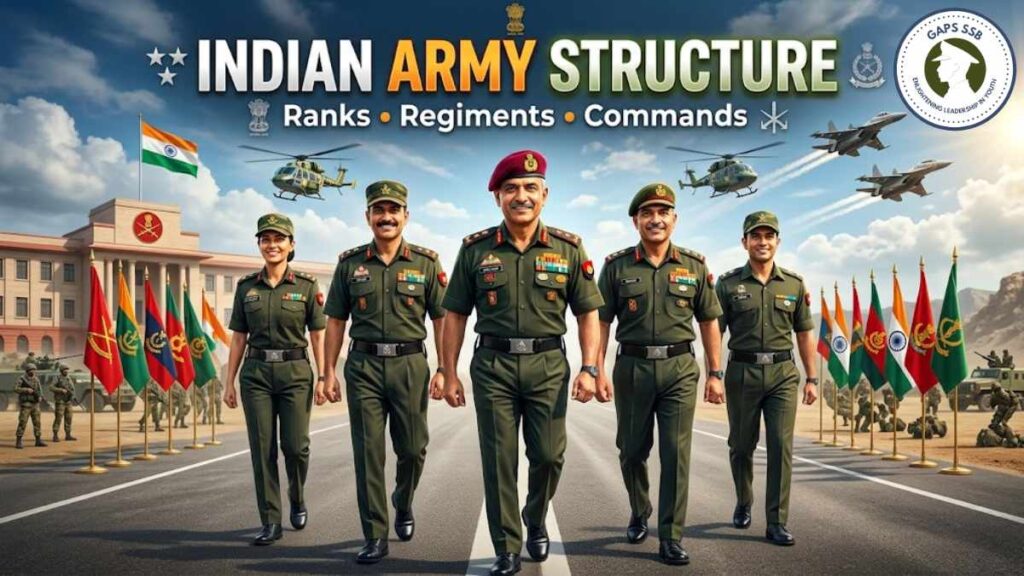
When millions of citizens sleep peacefully at night, it is the Indian Army that stands vigilant across deserts, mountains, forests, and borders. Built on the timeless value of “Service Before Self,” the Indian Army is not just a force—it is a symbol of courage, discipline, and sacrifice. For defence aspirants preparing for SSB, understanding Indian Army ranks, Indian Army regiments, Indian Army commands, and overall structure is essential. At GAPS SSB, widely known for providing the best SSB coaching in Delhi, candidates are trained to master such core defence topics with clarity and confidence. Indian Army Structure – The Backbone of Defence The Indian Army commands form the operational backbone of the force. The Army is divided into: Each command is responsible for a specific geographical area and ensures round-the-clock readiness to tackle threats across different terrains. From high-altitude regions to coastal areas, every command plays a crucial role in national security. Indian Army Ranks – Leadership Hierarchy Explained Understanding Indian Army ranks is one of the most important topics for SSB interviews. The hierarchy reflects leadership responsibility and command structure. 🎖 Commissioned Officers – The Leaders These are the officers selected through entries like NDA, CDS, and SSC. They lead troops and make strategic decisions. At GAPS SSB, special focus is given to helping aspirants understand these roles clearly, as questions on ranks are common in interviews. 🏅 Junior Commissioned Officers (JCOs) They act as a bridge between officers and soldiers. JCOs are highly respected for their experience and ground-level leadership. 🪖 Other Ranks – The Backbone Soldiers These are the warriors who execute missions on the ground: Their courage and dedication form the foundation of the Army’s strength. Arms vs Services – Who Fights & Who Supports? A key concept often asked in SSB interviews is the difference between Arms and Services. Combat Arms (Fighting Units) These units engage directly with the enemy: Services (Support Units) These ensure operational efficiency: The Army wins battles not only through firepower but also through strong support systems. Indian Army Regiments – The Soul of the Army The Indian Army regiments are the pride and identity of soldiers. Each regiment has its own traditions, history, and war cry. Top 10 Regiment in Indian Army (Popular & Respected) These regiments are known for their bravery, discipline, and unmatched legacy. Special Forces – Elite Warriors Among all units, Special Forces are the most elite. Selection is extremely tough, and only the most capable candidates make it through. Field Army Structure – Chain of Command The operational hierarchy of the Army flows as: Command → Corps → Division → Brigade → Battalion → Company → Platoon → Section This structure ensures efficient command and coordination during operations. Army Aviation & Modern Warfare Modern warfare has transformed significantly with technology. Army aviation supports: These capabilities enhance the effectiveness of ground forces in real-time combat situations. Training Institutes – Where Officers Are Made The Indian Army develops leaders through world-class training institutions: These institutions shape individuals into disciplined and responsible officers. Why This Topic is Important for SSB Understanding Indian Army ranks, regiments, and commands is crucial for: Common Questions Asked: At GAPS SSB, aspirants are trained to answer such questions with clarity, confidence, and officer-like thinking. How GAPS SSB Helps You Prepare Cracking the SSB requires more than knowledge—it requires personality, confidence, and leadership qualities. GAPS SSB provides: The focus is on transforming aspirants into future officers of the Indian Armed Forces. The Spirit of the Indian Army Every soldier represents: The Indian Army stands strong with one unwavering belief: Nation First – Always and Every Time 🇮🇳 Final Words Understanding the Indian Army ranks, Indian Army regiments, Indian Army commands, and structure is not just important for exams—it is essential for becoming an officer. If your dream is to serve the nation in uniform, start your preparation with the right guidance. With expert mentorship from GAPS SSB, you can build the confidence and knowledge required to succeed in the SSB interview.