Indian Army Ranks, Regiments, Commands & Structure
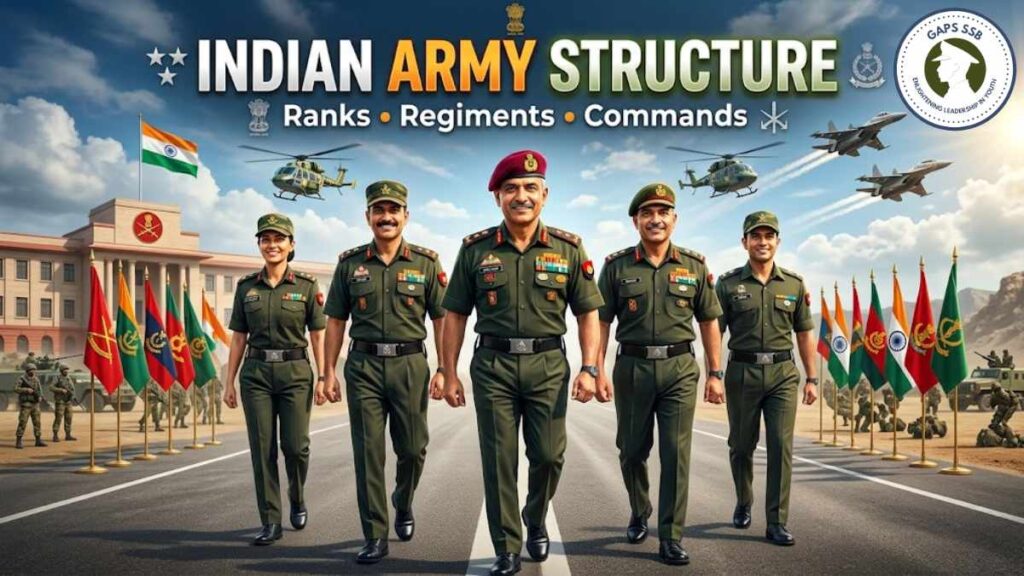
When millions of citizens sleep peacefully at night, it is the Indian Army that stands vigilant across deserts, mountains, forests, and borders. Built on the timeless value of “Service Before Self,” the Indian Army is not just a force—it is a symbol of courage, discipline, and sacrifice. For defence aspirants preparing for SSB, understanding Indian Army ranks, Indian Army regiments, Indian Army commands, and overall structure is essential. At GAPS SSB, widely known for providing the best SSB coaching in Delhi, candidates are trained to master such core defence topics with clarity and confidence. Indian Army Structure – The Backbone of Defence The Indian Army commands form the operational backbone of the force. The Army is divided into: Each command is responsible for a specific geographical area and ensures round-the-clock readiness to tackle threats across different terrains. From high-altitude regions to coastal areas, every command plays a crucial role in national security. Indian Army Ranks – Leadership Hierarchy Explained Understanding Indian Army ranks is one of the most important topics for SSB interviews. The hierarchy reflects leadership responsibility and command structure. 🎖 Commissioned Officers – The Leaders These are the officers selected through entries like NDA, CDS, and SSC. They lead troops and make strategic decisions. At GAPS SSB, special focus is given to helping aspirants understand these roles clearly, as questions on ranks are common in interviews. 🏅 Junior Commissioned Officers (JCOs) They act as a bridge between officers and soldiers. JCOs are highly respected for their experience and ground-level leadership. 🪖 Other Ranks – The Backbone Soldiers These are the warriors who execute missions on the ground: Their courage and dedication form the foundation of the Army’s strength. Arms vs Services – Who Fights & Who Supports? A key concept often asked in SSB interviews is the difference between Arms and Services. Combat Arms (Fighting Units) These units engage directly with the enemy: Services (Support Units) These ensure operational efficiency: The Army wins battles not only through firepower but also through strong support systems. Indian Army Regiments – The Soul of the Army The Indian Army regiments are the pride and identity of soldiers. Each regiment has its own traditions, history, and war cry. Top 10 Regiment in Indian Army (Popular & Respected) These regiments are known for their bravery, discipline, and unmatched legacy. Special Forces – Elite Warriors Among all units, Special Forces are the most elite. Selection is extremely tough, and only the most capable candidates make it through. Field Army Structure – Chain of Command The operational hierarchy of the Army flows as: Command → Corps → Division → Brigade → Battalion → Company → Platoon → Section This structure ensures efficient command and coordination during operations. Army Aviation & Modern Warfare Modern warfare has transformed significantly with technology. Army aviation supports: These capabilities enhance the effectiveness of ground forces in real-time combat situations. Training Institutes – Where Officers Are Made The Indian Army develops leaders through world-class training institutions: These institutions shape individuals into disciplined and responsible officers. Why This Topic is Important for SSB Understanding Indian Army ranks, regiments, and commands is crucial for: Common Questions Asked: At GAPS SSB, aspirants are trained to answer such questions with clarity, confidence, and officer-like thinking. How GAPS SSB Helps You Prepare Cracking the SSB requires more than knowledge—it requires personality, confidence, and leadership qualities. GAPS SSB provides: The focus is on transforming aspirants into future officers of the Indian Armed Forces. The Spirit of the Indian Army Every soldier represents: The Indian Army stands strong with one unwavering belief: Nation First – Always and Every Time 🇮🇳 Final Words Understanding the Indian Army ranks, Indian Army regiments, Indian Army commands, and structure is not just important for exams—it is essential for becoming an officer. If your dream is to serve the nation in uniform, start your preparation with the right guidance. With expert mentorship from GAPS SSB, you can build the confidence and knowledge required to succeed in the SSB interview.
Join Indian Army as SSC (Tech) Officer – Eligibility, Vacancy
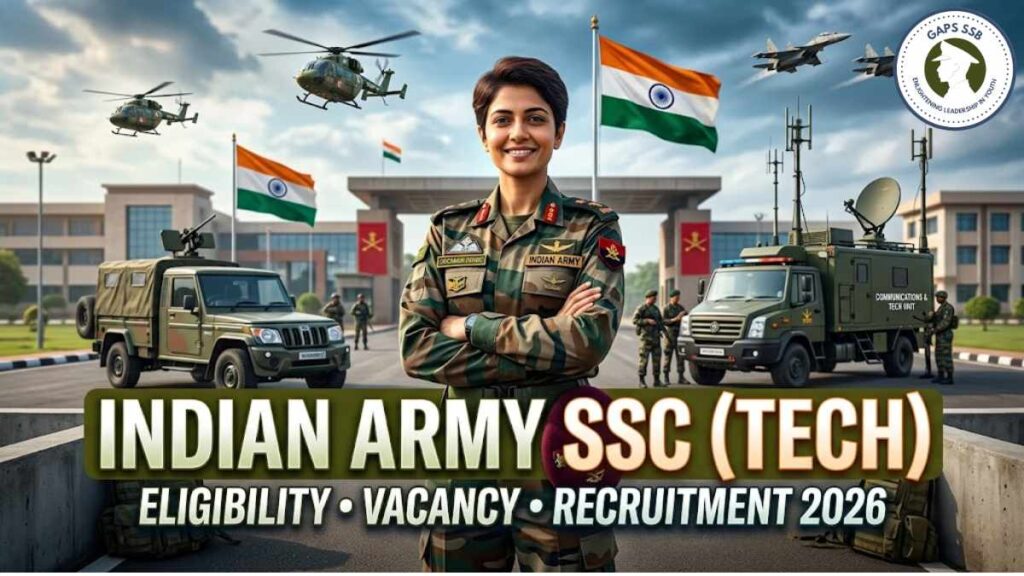
For engineering graduates who aspire to serve the nation with pride, the SSC (Technical) Entry in the Indian Army offers a prestigious opportunity to become an officer without appearing for a written exam. This entry is one of the most sought-after pathways for technically qualified candidates who want to combine engineering skills with military leadership. If you are preparing for Indian Army SSC Tech Recruitment 2026, understanding the complete process is essential. At GAPS SSB, known for providing the best SSB coaching in Delhi, aspirants are trained to crack the SSB interview and develop the Officer Like Qualities (OLQs) required to succeed in the Armed Forces. What is SSC (Tech) Entry in Indian Army? The Short Service Commission (Technical) entry is a direct officer entry scheme for engineering graduates. This entry is open to both men and women and focuses on selecting candidates with leadership potential, personality, and decision-making ability. Indian Army SSC (Tech) Eligibility Understanding Indian army as an SSC eligibility criteria is the first step for aspirants: Basic Eligibility: Final-year engineering students can also apply, provided they meet the required conditions before the course begins. Indian Army SSC Tech Recruitment 2026 – Key Details The Indian Army SSC Tech Recruitment 2026 is expected to follow a structured timeline: Candidates are advised to apply early as shortlisting is based on academic performance, making competition intense. Indian Army Vacancy 2026 (SSC Tech) As per expected trends, the Indian Army Vacancy 2026 for SSC (Tech) entry includes: Final selection depends on merit, SSB performance, and medical fitness. SSC Indian Army Recruitment 2026 – Selection Process The SSC Indian Army Recruitment 2026 selection process is designed to assess overall personality and leadership qualities: 1. Shortlisting Candidates are shortlisted based on their engineering marks. 2. SSB Interview (5 Days) Shortlisted candidates appear for the SSB interview, which includes: 3. Medical Examination Candidates recommended by SSB undergo detailed medical tests. 4. Final Merit List Final selection is based on: Training & Commissioning Selected candidates undergo 49 weeks of training at the Officers Training Academy. Training includes: After successful training, candidates are commissioned as Lieutenants in the Indian Army. Salary, Allowances & Benefits SSC (Tech) officers receive an attractive compensation package: Beyond financial benefits, the role offers honour, responsibility, and pride of serving the nation. Career Growth in SSC (Tech) This makes SSC (Tech) an excellent entry for long-term defence careers. Why Choose SSC (Tech) Entry? It is the perfect blend of engineering expertise and military leadership. How GAPS SSB Helps You Succeed Cracking the SSB interview is the most crucial stage of SSC Indian Army Recruitment 2026. This is where GAPS SSB plays a vital role. At GAPS SSB, aspirants receive: The focus is on transforming candidates into confident individuals ready to become officers in the Indian Army. Final Words An engineer builds systems, but an Army officer leads men with courage and responsibility. The SSC (Tech) entry gives you the opportunity to do both. If your goal is to wear the uniform and serve the nation, now is the time to start your preparation. With the right guidance from GAPS SSB, your journey towards becoming an officer becomes structured, focused, and achievable.
NDA Previous Year Question Papers – Download PDFs
Preparing for the National Defence Academy (NDA) exam requires a smart strategy, consistency, and the right study resources. One of the most effective ways to enhance your preparation is by practicing NDA Previous Year Question Papers. If you are aiming to join the Indian Armed Forces after 10+2, solving previous papers can give you a clear understanding of the exam pattern and difficulty level. At GAPS SSB, known for providing the best SSB coaching in Delhi, candidates are trained to use previous year papers effectively as part of their overall defence preparation strategy. NDA Exam Overview The NDA exam is conducted twice a year and consists of two major papers: Every year, lakhs of aspirants appear for the exam, but only a limited number qualify for the SSB interview stage. This makes it crucial to prepare strategically and efficiently. NDA Previous Year Question Paper PDF Download Aspirants often search for “NDA previous year question paper PDF download” to begin their preparation. Solving these papers helps you understand: While practicing, ensure you attempt papers in a timed environment to simulate real exam conditions. NDA Previous Year Question Papers (Year-Wise) Here is a structured overview of NDA Previous Year Question Papers for different years: NDA Previous Year Question Papers 2025 The latest papers help you understand current trends, question patterns, and difficulty levels. NDA Previous Year Question Papers 2024 A great resource to analyze recent changes in exam structure and topic distribution. NDA Previous Year Question Papers 2023 Helps in identifying frequently asked topics and important sections. NDA Previous Year Question Papers 2022 Useful for building a strong conceptual foundation and improving accuracy. NDA Previous Year Question Papers 2021 Ideal for beginners to start understanding the exam format and question types. Importance of NDA Previous Year Question Papers with Answers Practicing NDA previous year question papers with solutions and answer key gives you a competitive advantage. It is not just about solving questions but analyzing your performance. Key Benefits: 1. Understand Exam Pattern You get a real feel of the actual exam structure, marking scheme, and question distribution. 2. Improve Time Management Regular practice helps you learn how to manage time effectively during the exam. 3. Identify Strengths and Weaknesses You can focus more on weak areas and strengthen your concepts. 4. Build Exam Confidence Familiarity with the question pattern reduces exam anxiety. 5. Smart Attempt Strategy You can plan: How to Use NDA Previous Year Papers Effectively Simply downloading papers is not enough—you need a proper strategy: At GAPS SSB, students are guided on how to strategically use previous year papers along with mock tests and concept-building sessions. Why NDA Aspirants Choose GAPS SSB While clearing the written exam is important, the ultimate goal is to succeed in the SSB interview. This is where GAPS SSB plays a crucial role. Recognized as a trusted institute for defence preparation, GAPS SSB offers: The institute focuses on overall development, ensuring candidates are fully prepared for both written exams and SSB selection. NDA Previous Year Question Papers NDA Question Paper Solutions Final Thoughts Practicing NDA Previous Year Question Papers is one of the smartest ways to prepare for the exam. It not only improves your performance but also builds confidence and exam readiness. If you are serious about joining the Armed Forces, combine your preparation with the right guidance and strategy. With consistent practice and expert mentorship from GAPS SSB, your journey towards NDA success becomes more structured and achievable.