How to Join Garud Commando 2026
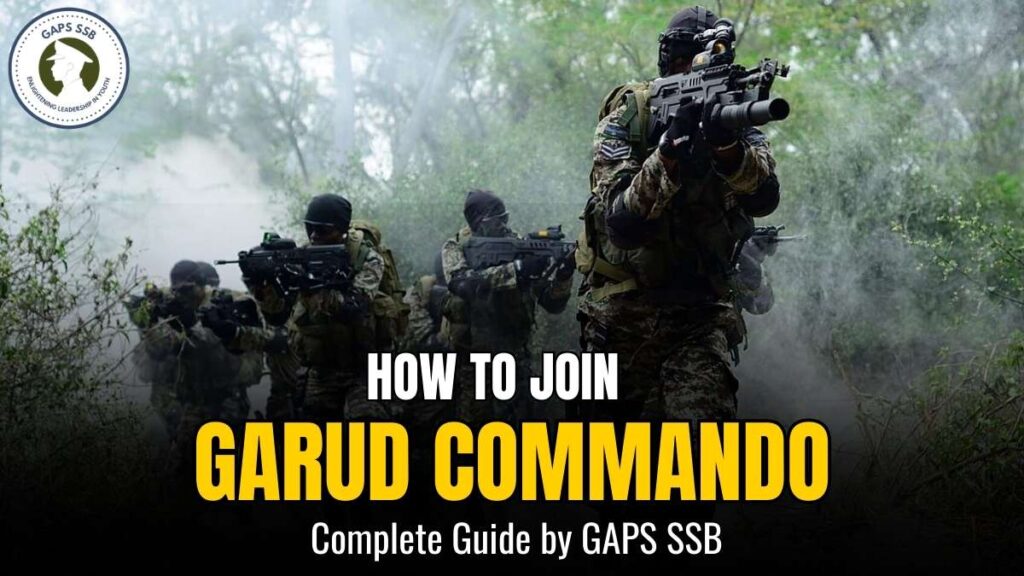
The Indian Armed Forces consist of three main branches: Indian Army, Indian Navy, and Indian Air Force. Each branch has its own elite special forces unit designed to perform high-risk and specialized missions. The Indian Army has Para Special Forces, the Indian Navy has MARCOS, and the Indian Air Force has its elite unit known as the Garud Commando Force. Many defence aspirants dream of serving in these elite units but often lack the right information about the How to Join Garud Commando pathway. Understanding the Garud Commando Joining Process is important for candidates who wish to serve in one of the most specialized forces of the Indian Air Force. This detailed guide explains How to Join Garud Commando, their history, duties, recruitment process, and training structure for aspirants preparing for a career in the Indian Air Force. Brief History of the Garud Commando Force To understand How to Join Garud Commando, it is important to know the origin of this elite unit. The Garud Commando Force was formed after terrorist attacks targeted two major air bases in Jammu and Kashmir in 2001. Although these attacks were successfully handled, it highlighted the need for a specialized force to protect Indian Air Force installations and high-value assets. Initially, the unit was called Tiger Force, but it was later renamed the Garud Force. The first batch consisted of 100 volunteers from the Airmen Training Centre in Belgaum, Karnataka. These volunteers underwent intense commando training, and 62 candidates successfully completed the course. The Garud Commando Force was officially established on 6 February 2004, and it was first publicly presented during the Air Force Day celebration on 8 October 2004. Today, understanding this background helps aspirants appreciate the significance of the Garud Commando Joining Process. Duties and Responsibilities of Garud Commandos Before learning How to Join Garud Commando, candidates should understand the roles and responsibilities of this elite unit. Garud Commandos are trained to perform specialized missions such as: Due to these critical responsibilities, the Garud Commando Joining Process is extremely rigorous and selective. How to Join Garud Commando – Entry Routes Many aspirants ask How to Join Garud Commando in the Indian Air Force. There are two main pathways in the Garud Commando Joining Process: Each route has a different selection procedure and training path. Non-Commissioned Entry – Airmen Route The most common path in How to Join Garud Commando is through the Airmen recruitment process. Candidates are selected directly through recruitment notifications. During the Garud Commando Joining Process, candidates undergo strict mental and physical screening. Key points of this entry route include: Once selected, candidates undergo one of the longest special forces training programs in the Indian Armed Forces. After successfully completing the training, candidates become permanent members of the Garud Commando Force and continue serving in this specialized role during their career. Commissioned Officer Entry Another path in How to Join Garud Commando is through the officer entry route. In this route, candidates first join the Indian Air Force as officers through competitive selection exams. After training, selected officers from the Ground Duty branch may volunteer for the Garud unit. During the Garud Commando Joining Process, officer candidates undergo specialized training before joining operational Garud units. Training Duration and Phases One of the most challenging aspects of How to Join Garud Commando is the training. Garud training is considered one of the longest special forces training programs, lasting approximately 72 weeks. The Garud Commando Joining Process includes several training phases. Phase 1 – Recruitment and Pre-Selection Candidates undergo initial screening to evaluate: Only highly motivated candidates move forward in the Garud Commando Joining Process. Phase 2 – Selection During this stage, candidates face intense physical tests designed to eliminate those who cannot meet special forces standards. The goal is to select only the most capable candidates for further training. Phase 3 – Basic Military Training All candidates go through 12 weeks of basic military training, which includes: This stage converts civilian recruits into trained military personnel before continuing the Garud Commando Joining Process. Phase 4 – Special Forces Training Candidates who pass the basic phase move on to Special Forces training, which is extremely demanding. Training includes: Only the most determined candidates successfully complete this stage of the Garud Commando Joining Process. Phase 5 – Advanced Special Forces Training The final phase includes specialized training such as: During this stage, candidates may also train alongside other elite forces and gain real operational experience. Completing this stage successfully means the candidate has fully passed the Garud Commando Joining Process. Operational Experience and Deployment After training, Garud Commandos are deployed at various Indian Air Force bases across the country. Their responsibilities include: Some Garud Commandos also receive advanced international training and participate in specialized missions. Current Structure of the Garud Commando Force The Garud Commando Force continues to expand as an important unit of the Indian Air Force. Currently: These units are deployed at various air bases to safeguard the critical assets of the Indian Air Force. Conclusion Understanding How to Join Garud Commando is essential for defence aspirants who wish to serve in one of the most elite units of the Indian Air Force. The Garud Commando Joining Process is extremely demanding and requires exceptional physical fitness, mental strength, discipline, and determination. Only the most dedicated candidates successfully complete the rigorous selection and training program. For aspirants aiming to build a career in the Indian Armed Forces, preparing early and developing leadership qualities can significantly improve their chances of success. With the right preparation, dedication, and motivation, candidates can successfully complete the Garud Commando Joining Process and serve the nation as part of this prestigious special forces unit.
CDS vs NDA: Choosing the Best Defence Career Path
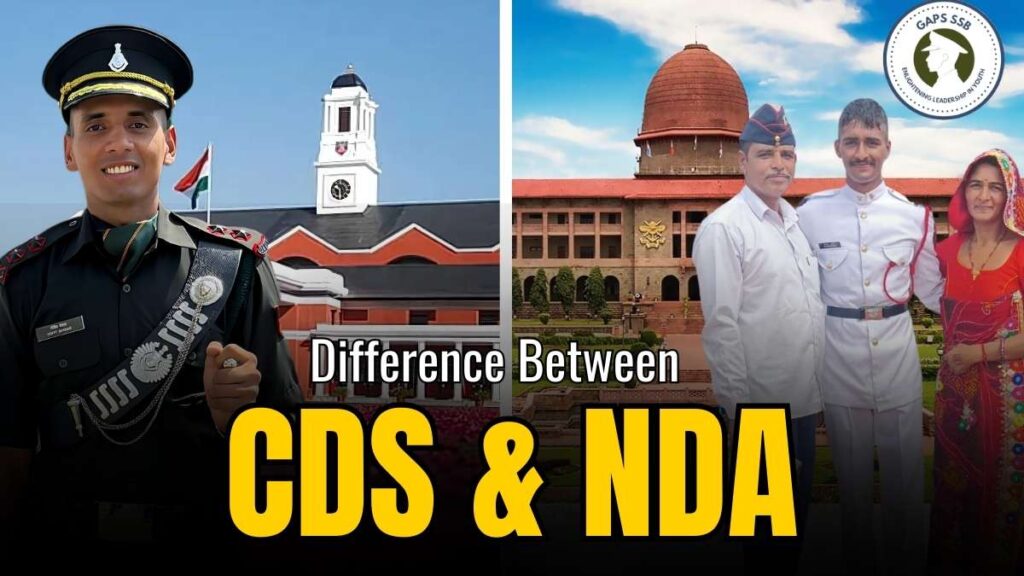
Many defence aspirants often face confusion while deciding between CDS vs NDA as their entry route into the Indian Armed Forces. Both examinations provide the opportunity to become an officer in the Indian Army, Navy, or Air Force, but they differ in terms of eligibility, training structure, career timeline, and lifestyle. Understanding the Difference between CDS & NDA is important before choosing the right path. Your decision should depend on factors such as age, education level, career goals, and readiness for military life. At GAPS SSB in Delhi, defence aspirants receive expert guidance not only for written examinations but also for the SSB interview, helping them develop the confidence and Officer Like Qualities required for selection. This guide explains CDS vs NDA in a simple and professional way so that aspirants can clearly understand the Difference between CDS & NDA and choose the most suitable defence career path. Overview: CDS vs NDA Before exploring the details, here is a quick overview of CDS vs NDA. When analyzing the Difference between CDS & NDA, the biggest distinction is the stage of education at which candidates apply. 1. Eligibility – Who Can Apply? One of the first aspects of CDS vs NDA is eligibility. NDA Entry NDA is suitable for students who decide early that they want to join the armed forces. Candidates usually apply between the ages of 16 and 19 after completing Class 12. Young aspirants who are physically active and motivated to pursue a defence career from an early stage often prefer this path. CDS Entry CDS is designed for candidates who apply after completing graduation. It is ideal for individuals who discovered their interest in defence services later during their college years. When discussing the Difference between CDS & NDA, the eligibility stage is the most significant factor. 2. Learning and Training Environment Another important aspect of CDS vs NDA is the type of training environment. NDA Training NDA provides a complete military education environment. Cadets undergo academic studies, physical training, sports, and leadership development simultaneously. The academy is known for its structured lifestyle and holistic development of future officers. CDS Training In the CDS vs NDA comparison, CDS training is more focused and intense. Since candidates are already graduates, the training emphasizes military skills, leadership, and operational readiness rather than academic education. Understanding this training difference helps candidates evaluate the Difference between CDS & NDA more clearly. 3. Career Timeline The career timeline is another important factor when comparing CDS vs NDA. NDA Career Path Since candidates join earlier, NDA officers begin their careers at a younger age. This provides them with longer service duration and potential seniority advantages in the future. CDS Career Path CDS candidates join after graduation, which means they start their military careers slightly later but move quickly from civilian life into officer training. This difference in starting age highlights another key Difference between CDS & NDA. 4. Commission Types The Difference between CDS & NDA also appears in the types of commissions available. NDA Commission NDA entry provides Permanent Commission, which allows officers to serve in the armed forces until retirement. CDS Commission In the CDS vs NDA comparison, CDS offers both: This option provides flexibility for candidates who want to serve for a limited duration. 5. Lifestyle and Exposure Lifestyle and exposure also play a role when evaluating CDS vs NDA. NDA Experience NDA cadets experience a unique campus life that includes: This environment helps develop discipline and teamwork at an early stage. CDS Training Life CDS training is more professional and focused on preparing candidates for immediate responsibilities as officers. When analyzing the Difference between CDS & NDA, lifestyle and training exposure are important considerations. 6. Exam Difficulty and Competition The difficulty level is often discussed when comparing CDS vs NDA. NDA Exam The NDA exam is based on the 10+2 level syllabus, but competition is extremely high because the age limit is narrow. CDS Exam The CDS exam is at the graduation level, covering subjects like English, General Knowledge, and Mathematics. Although academically tougher, the candidate pool is broader, which affects the competitive environment. This comparison further explains the Difference between CDS & NDA in terms of exam structure. 7. Long-Term Career Perspective When considering CDS vs NDA, candidates should also think about long-term career growth. NDA Advantage Joining earlier means more years of service and more time to develop leadership experience. CDS Advantage Graduates entering through CDS often bring greater maturity, academic exposure, and professional clarity to their careers. Understanding this aspect helps aspirants evaluate the Difference between CDS & NDA from a long-term perspective. Final Thoughts on CDS vs NDA Choosing between CDS vs NDA depends on your age, educational background, and career goals. Both paths ultimately lead to the same goal – becoming an officer in the Indian Armed Forces. After commissioning, officers from both entries receive the same respect, responsibilities, and career opportunities. For defence aspirants, the most important step is consistent preparation and strong personality development. At GAPS SSB in Delhi, candidates receive professional mentorship for written exams as well as SSB interview preparation, helping them develop leadership skills and Officer Like Qualities required for defence selection. FAQs – CDS vs NDA Does NDA give an advantage over CDS in promotions? Joining earlier through NDA may provide a seniority advantage, but promotions in the armed forces depend mainly on performance and leadership ability. Is CDS a good option for someone who did not prepare for NDA? Yes. CDS is specifically designed for graduates who decide to pursue a defence career later. Which entry provides better training? In the CDS vs NDA comparison, both training systems are excellent. NDA offers longer academic and military training, while CDS focuses on intensive officer training. Is the lifestyle different after commissioning? No. Once commissioned, officers from both entries share the same lifestyle, salary structure, and responsibilities. Which exam is easier? Neither exam is easy. The Difference between CDS & NDA lies mainly in the syllabus level and
Most Common SSB Interview Question
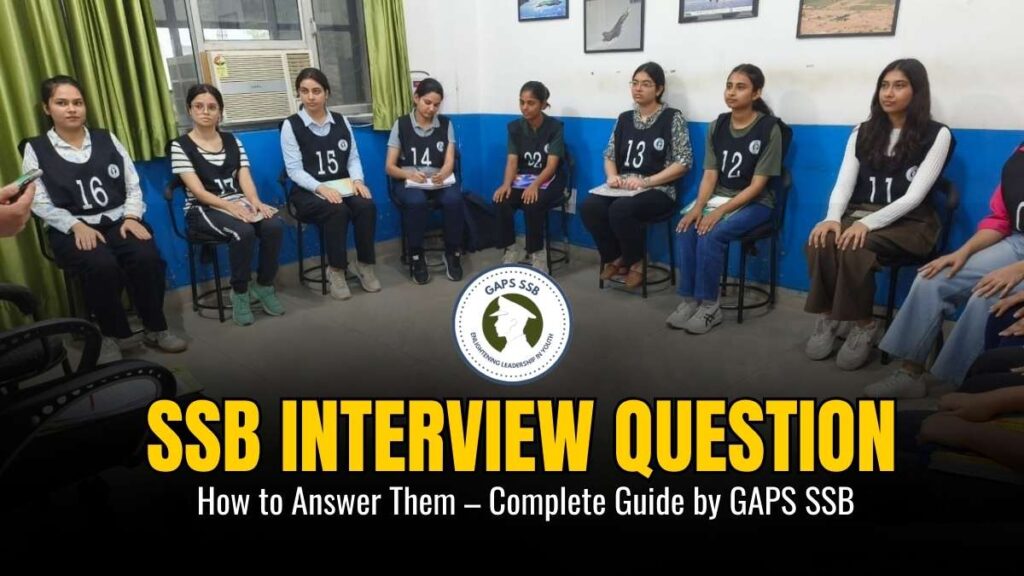
The Services Selection Board (SSB) interview is one of the most important stages in the selection process for candidates who want to join the Indian Armed Forces through entries like NDA, CDS, AFCAT, and other defence exams. The interview is designed to evaluate a candidate’s personality, leadership ability, decision-making skills, and Officer Like Qualities (OLQs). Many aspirants feel nervous because they are unsure about the SSB Interview Question patterns asked by the Interviewing Officer (IO). Understanding the Most Common SSB Interview Question patterns can help candidates prepare confidently and respond naturally during the interview. At GAPS SSB in Delhi, candidates receive structured guidance and mock interview practice to handle every SSB Interview Question effectively. Below is a detailed guide to the Most Common SSB Interview Question categories along with practical answering tips. 1. Tell Me About Yourself One of the Most Common SSB Interview Question candidates face is “Tell me about yourself.” This question helps the Interviewing Officer understand your background and communication ability. Answering Tip Keep your introduction structured and natural. Your answer should include: What to Avoid Avoid giving a long memorized speech. The goal is to show clarity and confidence while answering this SSB Interview Question. 2. Tell Me About Your Family Background Another Most Common SSB Interview Question focuses on your family because the board wants to understand your upbringing and values. Answering Tip Speak respectfully about your family and highlight what you learned from them. Example approach: “My father works as a [profession], and from him I learned discipline and dedication. My mother is a [profession/homemaker], and she taught me patience and responsibility.” This type of response shows maturity and sincerity while answering the SSB Interview Question. 3. Why Do You Want to Join the Armed Forces? This is one of the Most Common SSB Interview Question asked to understand your motivation for joining the military. Answering Tip Connect your answer with values such as: What to Avoid Avoid saying you want to join only for job security or prestige. The board expects genuine motivation when answering this SSB Interview Question. 4. What Are Your Strengths and Weaknesses? Questions about strengths and weaknesses are a Most Common SSB Interview Question designed to evaluate your self-awareness. Answering Tip Mention strengths that relate to Officer Like Qualities, such as: For weaknesses, choose something realistic and explain how you are improving it. Example: “I used to feel nervous while speaking in groups, but I have been improving by practicing group discussions and presentations.” Honesty is important when responding to this SSB Interview Question. 5. Questions Based on Your PIQ Form The Personal Information Questionnaire (PIQ) plays a crucial role in the SSB Interview Question process. Many questions asked by the Interviewing Officer come directly from this form. Answering Tip Be completely honest while filling the PIQ. For example: If you mention reading books as a hobby, you should be ready to answer questions about: Preparation for PIQ-based questions helps candidates confidently handle the Most Common SSB Interview Question types. 6. Current Affairs and General Awareness Questions Questions related to national and international events are another Most Common SSB Interview Question category. Preparation Tip Stay updated with: Example questions may include: Being informed helps candidates respond confidently to this SSB Interview Question category. 7. Situational Questions Situational problems are a Most Common SSB Interview Question used to test decision-making and leadership qualities. Example: “If you see two friends fighting in your group, what will you do?” Answering Tip Your response should show: The goal is to demonstrate maturity while answering this SSB Interview Question. 8. Questions Related to Academics and Career Choices The Interviewing Officer may ask questions related to your academic subjects. Example: “As a mechanical engineering student, how can your knowledge benefit the armed forces?” Answering Tip Explain how your academic knowledge can contribute to problem-solving, technology, or operational efficiency. This shows clarity while answering the SSB Interview Question. 9. Questions About Hobbies and Extracurricular Activities This is another Most Common SSB Interview Question category. If you mention hobbies such as sports, music, or reading, be prepared for follow-up questions. Example: Never write false hobbies in your PIQ, because the Interviewing Officer will explore them during the SSB Interview Question session. 10. Tricky and Stress Questions Sometimes the Interviewing Officer may ask difficult or unexpected questions to test your composure. Example: “If you are not selected this time, what will you do?” Answering Tip Show determination and optimism. Example response: “I will analyze my weaknesses, improve myself, and prepare better for the next attempt.” Handling such moments confidently is key when answering the Most Common SSB Interview Question types. How to Prepare for SSB Interview Questions Preparing for the Most Common SSB Interview Question requires consistent self-improvement and practice. Daily Self-Reflection Review your daily activities and identify situations where you demonstrated leadership or responsibility. Mock Interviews Practicing mock interviews helps you become comfortable with any SSB Interview Question. Improve Communication Skills Clear and confident communication is essential during the interview. Stay Updated with Current Affairs Regular reading helps you answer knowledge-based questions effectively. Be Honest and Natural Authenticity is the most important factor while answering any SSB Interview Question. Role of GAPS SSB in Interview Preparation At GAPS SSB in Delhi, aspirants receive professional guidance to prepare for every Most Common SSB Interview Question through structured training programs. Training includes: The institute focuses on building confidence, clarity, and Officer Like Qualities, which are essential for success in the SSB selection process. Conclusion The SSB interview is not about memorizing answers but about presenting your real personality and leadership potential. Preparing for the Most Common SSB Interview Question helps candidates stay confident and composed during the interview. With regular practice, self-awareness, and proper mentorship, candidates can confidently face any SSB Interview Question and move closer to their goal of joining the Indian Armed Forces.